Meet the New Titans of Autonomous Mobility
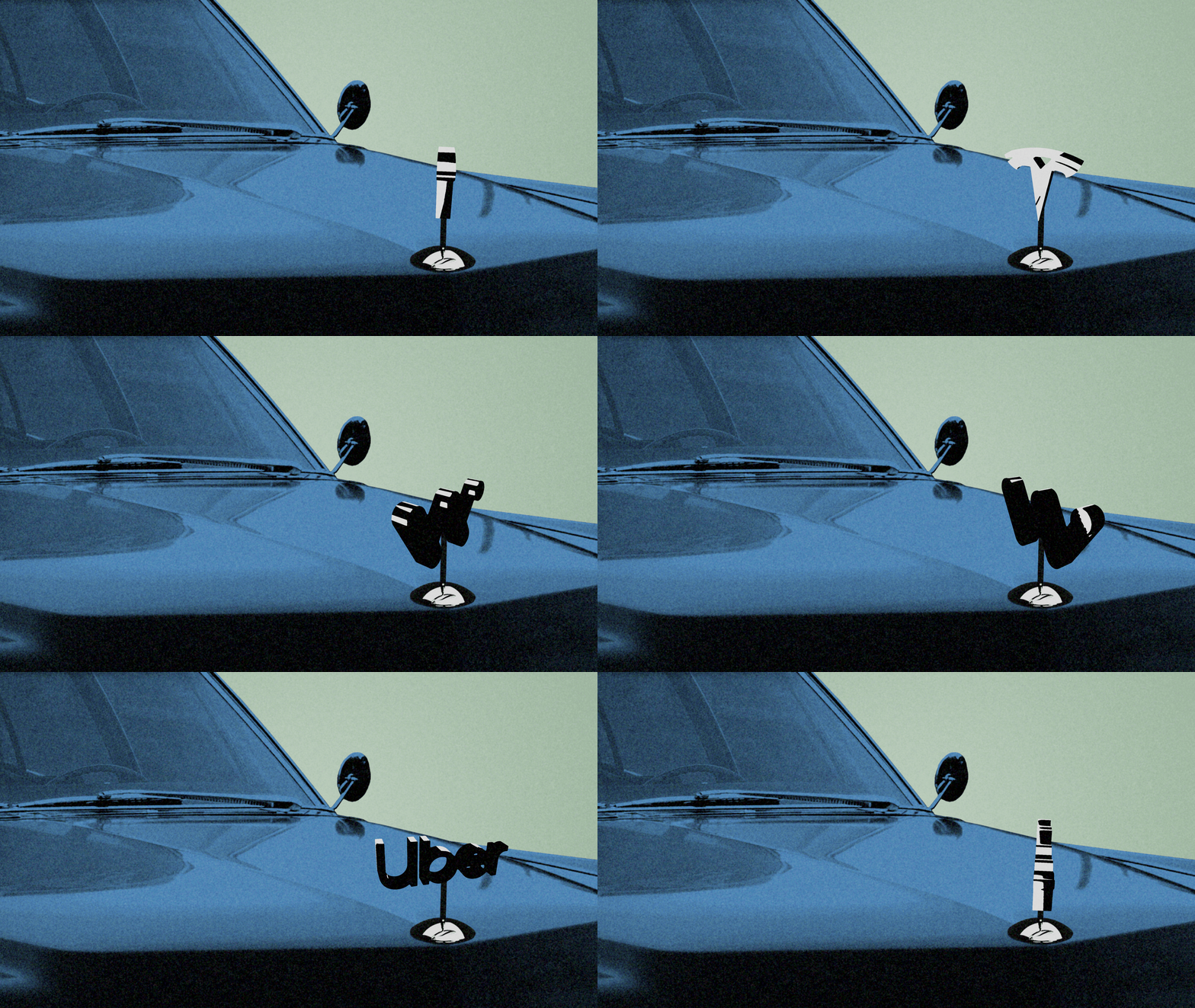
Waymo, Tesla, and Uber are redefining the race for autonomous vehicles. Each has distinct advantages, but the true winner will be the one that scales operations effectively.
mobility is shifting. No longer dominated by the traditional Big Three of GM, Ford, and Chrysler, the race towards autonomy now features Waymo, Tesla, and Uber. Each is positioning itself as a leader in the self-driving future.
The Current Scene
Autonomous vehicles (AVs) are no longer a futuristic concept. they're operational in cities and on highways today. Robotaxis ply the streets in select urban areas, while driverless trucks transport goods across states like Arizona and Texas. But the real battle lies in the ability to scale these operations effectively.
Success in this new frontier requires more than just deploying AV technology. Infrastructure is key. Companies need charging depots, maintenance facilities, and advanced route optimization systems to handle fluctuating demand efficiently.
Waymo: The Pioneer
Waymo stands out as the frontrunner in the robotaxi sector. Operating in 11 cities, it facilitates 500,000 paid trips weekly and has amassed over 200 million driverless miles. With $16 billion in funding, primarily from Alphabet, Waymo is looking to expand beyond the U.S to cities like London and Tokyo.
Yet, Waymo faces challenges. It's primarily a tech supplier, not a vehicle operator. It doesn't manufacture cars but instead partners with manufacturers and fleet management companies for maintenance.
Uber's Edge
Uber's advantage lies in its solid ride-matching platform, honed over 15 years. Robotaxis present an opportunity to take advantage of this experience. The company is investing heavily in AV infrastructure, including $100 million for charging hubs in major cities like San Francisco and Los Angeles.
The hurdle for Uber is reliance on external partners for its vehicle supply and maintenance. It collaborates with various AV developers to ensure a competitive market but lags behind Waymo's technological lead.
Tesla's Data Drive
Tesla's edge is data, a treasure trove collected from 3.2 million vehicles on U.S. roads. This data feeds directly into enhancing its autonomous tech. Tesla's extensive Supercharger network and cost-effective manufacturing bolster its potential in scaling a robotaxi service.
However, Tesla's Full Self-Driving (FSD) tech still requires human oversight. The company has yet to establish a significant robotaxi fleet. While some doubt its tech's viability without lidar or radar, Tesla investors remain optimistic.
The Road Ahead
Traditional automakers focus on incremental advancements, while the new Big Three race ahead. The question is, who will successfully transition from pioneers to dominators in the AV market? The chart tells the story. These companies, with their unique strengths, are redefining mobility.
Numbers in context: The U.S. race to autonomy is just heating up. Waymo, Tesla, and Uber lead the charge, but who will ultimately control the roads?
Get AI news in your inbox
Daily digest of what matters in AI.