Maximo's Solar Push: A Game Changer in Energy Efficiency
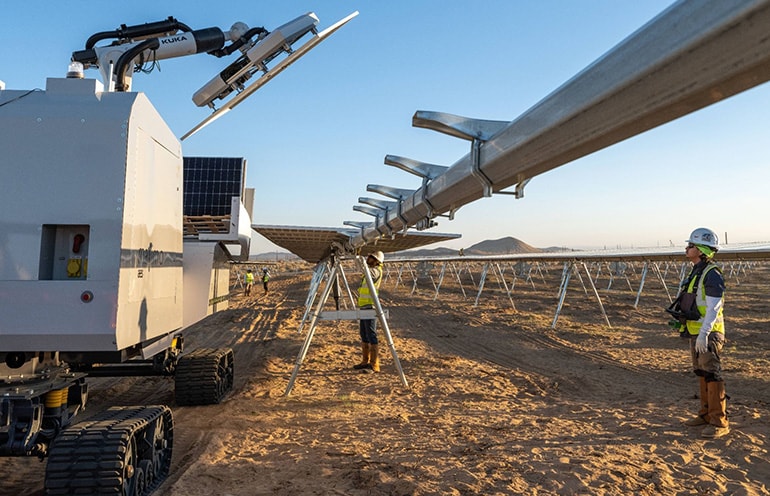
Maximo's robotic technology is doubling solar panel installation rates, addressing labor shortages and driving the transition to renewable energy.
As the need for clean energy skyrockets, Maximo is stepping up. The company's advanced robotics have successfully installed 100 megawatts of solar capacity at AES Corp.'s Bellefield site in California. This signals a shift from pilot projects to full-scale commercial deployment.
Robotics Innovation Meets Real-World Challenges
In a world where data centers are expanding and fossil fuel costs are unpredictable, solar energy promises stability. Yet, the solar industry is bogged down by labor shortages and fluctuating timelines. Enter Maximo, a company that sees robotics as the answer. By doubling installation rates, it's not just about efficiency, it's about keeping up with demand.
"Solar installation might be repetitive, but it's also grueling," says Maximo founder Deise Yumi Asami. Panels are bigger and heavier, requiring precision in placement and handling. The real challenge? Navigating the aluminum sides, glass fronts, and sunlight glare. Maximo’s robots tackle these obstacles, even in California’s dusty, windy conditions.
The Future of Solar is Robotic
Field robots might sound futuristic, but Maximo is making it a reality. Their system offers modes for both supervised and autonomous operations. In autonomous mode, a single button press lets the robot handle everything. Supervised mode means robots place panels with submillimeter accuracy, while humans secure them.
Maximo's approach offers a "step change in productivity," and that's no small feat. Instead of three workers on ladders, their robots manage tasks autonomously, proving the viability of gigawatt-scale operations. It's a powerful proof point that robotics isn't just feasible, but essential, for future energy projects.
Powered by AI Giants
Behind Maximo’s success are tech giants NVIDIA and AWS. NVIDIA provides the AI infrastructure, while AWS supports with scalable computing and real-time analytics. This collaboration compresses development timelines and boosts confidence in the field performance of Maximo’s robots.
"Physical AI can accelerate real-world energy infrastructure," says Marc Spieler from NVIDIA. Indeed, it’s not just about speed, it's about keeping reliability high in challenging environments.
Why should you care? Because Maximo is a glimpse into the future of energy. As the world races towards carbon-free solutions, who wouldn't want to see faster, safer, and more efficient solar installations? The question isn't if robotics will dominate solar construction. It's when.
Get AI news in your inbox
Daily digest of what matters in AI.