Mastering AI Memory: Claude Code's Layered Approach
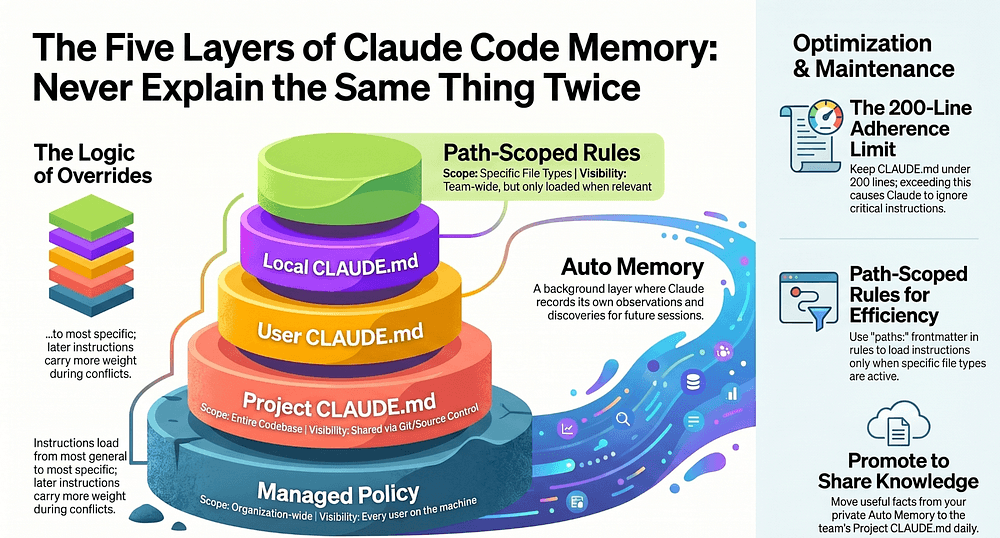
Understanding the intricacies of Claude Code's multi-layered memory system can prevent repetitive mistakes. A strategic approach to organizing persistent facts is key to efficient AI interactions.
In the intricate dance of AI-human interaction, one of the most frustrating missteps is the repetition of past mistakes. For many users of Claude Code, this means re-explaining the same configurations and preferences. But why does this happen, and how can it be fixed? It's a question of memory, or the apparent lack thereof.
Understanding Claude Code's Memory Layers
Claude Code operates with a memory system divided into five distinct layers: managed policy, user CLAUDE.md, project CLAUDE.md, local CLAUDE.md, and a set of path-scoped rules. Additionally, there's an auto memory feature, a kind of digital scratchpad maintained by Claude. This structure isn't just for show. Each layer serves a purpose, providing a nuanced way to manage and retrieve information across sessions.
The persistent issue of AI forgetting is less about memory loss and more about how these layers are utilized. When users don’t properly categorize and store information within the appropriate segment, AI begins each session without a reliable guide, leading to the all-too-familiar cycle of re-explanation.
The Art of Effective Memory Management
The solution lies not in technological magic, but in disciplined practice. Claude's memory system demands organization. Project-wide facts should reside in project CLAUDE.md, while personal preferences belong in local CLAUDE.md. Rules for specific file conventions should be path-scoped to avoid bloating token costs.
Yet, the challenge remains: How can users be motivated to maintain this discipline consistently? The reality is, without such habits, users will continue to endure the 'repeated re-explanation tax,' a productivity drain that can be easily avoided with a little foresight and organization.
A Call to Action: Implementing Change Today
Promoting notes into the appropriate layers isn't just a suggestion, it's imperative for effective AI use. Start today by auditing your interactions with Claude and extracting frequently repeated commands or corrections into the relevant CLAUDE.md files. This small investment of time can yield significant returns in efficiency and sanity.
, while AI advancements continually promise to speed up our workflows, the responsibility for effective memory management still rests with us. It's not about Claude forgetting. it's about us remembering to use it wisely. Are we ready to take on that responsibility? Or will we remain passive, caught in a cycle of our own making?
Get AI news in your inbox
Daily digest of what matters in AI.