LangChain: Simplifying AI Development with LLM Integration
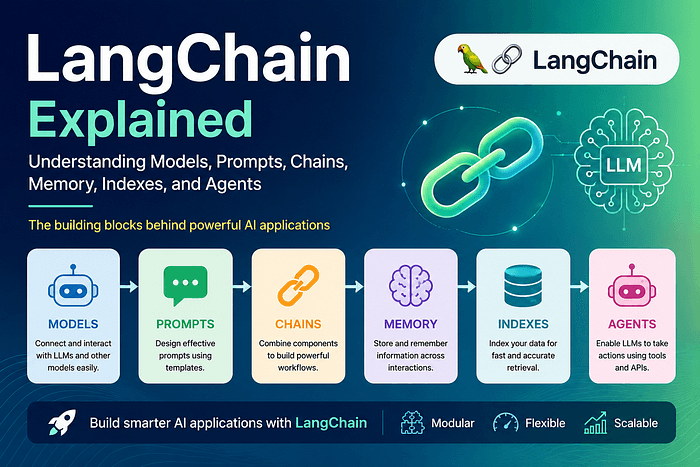
LangChain offers a streamlined approach for integrating Large Language Models into applications. It provides a versatile framework enabling model agnosticism, reusable prompts, and efficient workflows.
LangChain is emerging as a vital tool for developers working with Large Language Models (LLMs) such as GPT, Gemini, and Claude. This open-source framework simplifies the creation of AI-driven applications by connecting LLMs with external data, memory, tools, and workflows. The specification is as follows: LangChain provides a unified interface to work with various LLM providers, eliminating the cumbersome process of switching models.
Key Features of LangChain
One of the standout features of LangChain is its model-agnostic approach. Developers can switch between different LLM providers like OpenAI, Gemini, and Claude without rewriting significant portions of their code. This flexibility is critical in the fast-paced AI landscape, where new models constantly emerge.
LangChain also offers reusable prompt templates, allowing developers to create dynamic inputs that improve maintainability and scalability. Why bother hardcoding prompts when you can have a system that adjusts them dynamically based on user input?
Improving AI Workflows
Chains are another innovative component of LangChain. They connect various operations into cohesive workflows, making complex processes easier to build and manage. By linking prompts, LLMs, and output parsers, developers can automate workflows that would otherwise require manual intervention. This change affects contracts that rely on the previous behavior.
Memory is another critical component that enhances user experience. By default, LLM API calls are stateless. Memory stores conversation history, allowing applications to remember previous interactions and provide context-aware responses.
Practical Applications
What can you build with LangChain? The possibilities are extensive. From AI chatbots capable of maintaining context throughout a conversation to customer support systems accessing company knowledge bases for precise responses. Developers should also note the breaking change in the return type when using memory components.
LangChain facilitates the development of retrieval-augmented generation (RAG) applications, allowing systems to pull information from documents and generate context-aware answers. Meanwhile, personal AI assistants, content generation tools, and recommendation systems further showcase LangChain's versatility.
Is LangChain the end of complex AI development? Not exactly. But it does significantly lower the barrier for developers, allowing them to focus more on application logic than infrastructure. Backward compatibility is maintained except where noted below.
Get AI news in your inbox
Daily digest of what matters in AI.