Japanese Giants Unite for Ambitious Physical AI Venture
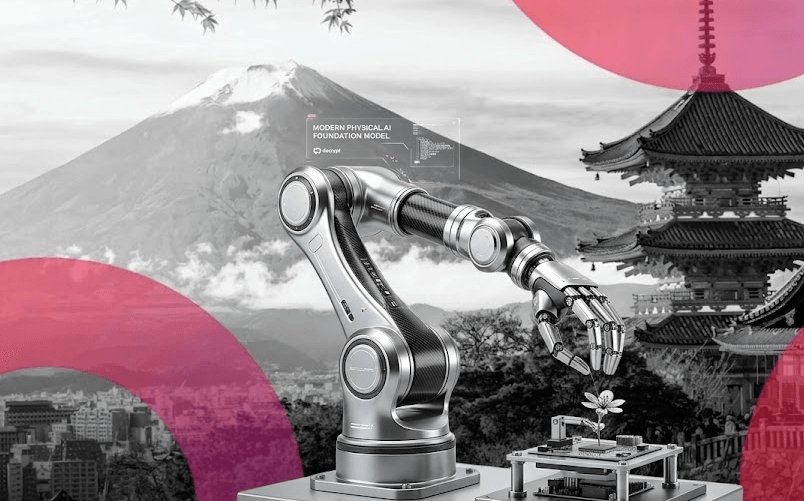
SoftBank, Sony, NEC, and Honda are collaborating on a trillion-parameter AI model for autonomous machines, marking a bold step in 'physical AI.'
SoftBank Group Corp., Sony Corp., NEC Corp., and Honda Motor Co. have joined forces to embark on an ambitious venture artificial intelligence. Their target? A trillion-parameter model dedicated to advancing autonomous machines, a concept now gaining traction under the term 'physical AI.' This collaboration not only underscores the growing importance of AI in Japan but also reflects a strategic alignment among these tech giants to innovate in a highly competitive field.
The Goal: Trillion-Parameter Model
While the aim is clear, the path is fraught with challenges. Developing a trillion-parameter model represents a massive engineering feat, one that requires not only significant computational resources but also a deep understanding of both AI and robotics. Japanese manufacturers are watching closely. They know that precision matters more than spectacle in this industry, and the question remains whether this joint venture can bridge the gap between lab and production line.
Why It Matters
The potential impact of this initiative isn't to be underestimated. Autonomous machines, powered by such sophisticated AI models, could revolutionize industries ranging from manufacturing to service. Imagine robots in factories that not only execute tasks with precision but also learn and adapt in real-time. The demo impressed. The deployment timeline is another story, as the journey from prototype to practical application is often long and winding.
Challenges Ahead
However, the endeavor isn't without its hurdles. The integration of AI into physical systems demands more than just algorithms. It requires strong hardware, efficient energy management, and most importantly, safety measures that can be trusted. On the factory floor, the reality looks different. The true test will be the ability of these companies to create a system that balances innovation with reliability.
The collaboration between these prominent Japanese companies signals a strong commitment to pushing the boundaries of what machines can achieve. But, with great ambition comes the risk of great obstacles. Will they manage to set a new standard for physical AI, or will the complexities of real-world deployment slow down their efforts? Only time will reveal the outcome, but the stakes couldn't be higher in their pursuit to redefine the future of autonomy.
Get AI news in your inbox
Daily digest of what matters in AI.
Key Terms Explained
The science of creating machines that can perform tasks requiring human-like intelligence — reasoning, learning, perception, language understanding, and decision-making.
A value the model learns during training — specifically, the weights and biases in neural network layers.