Humanoid Robots: Navigating Human Spaces with Precision
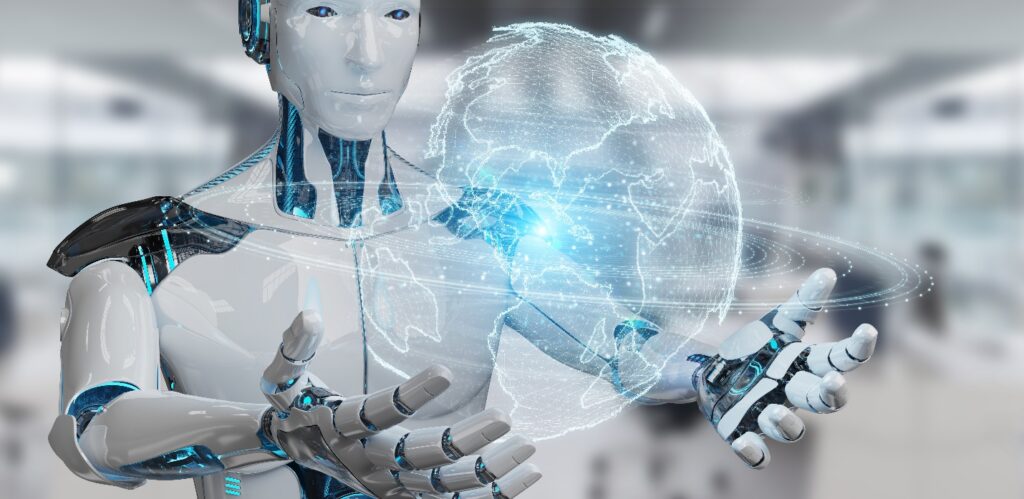
Humanoid robots need more than just a tech upgrade, they require new strategies to interact safely with humans. With advancements in vision and audio processing, these robots are learning to read unpredictable environments.
Designing humanoid robots isn't just about slapping a model on a GPU rental. It's one of the most complex challenges in robotics today. Managing movement, balance, and reactivity across joints and sensors demands latest technology, especially when these machines operate alongside humans.
While humans naturally adjust their balance and process sensory information in milliseconds, robots need an array of sensors to replicate this environmental awareness. The challenge lies in processing these inputs swiftly to ensure safety and efficiency around unpredictable humans.
Vision: Seeing Beyond the Surface
For humanoid robots, situational awareness begins with vision. They need to interpret their surroundings accurately, whether it involves picking up objects or steering clear of humans. RGB image sensors, combined with depth perception techniques, mimic human vision.
Processing visual data quickly is key. Latency becomes an issue as data travels through long cables. Here, ADI's Gigabit Multimedia Serial Link (GMSL) shines by allowing real-time data transport, supporting fast, local processing on the robot itself. This keeps inference costs down and boosts processing speed.
Audio: More Than Just Conversation
Vision isn't enough. Successful human-robot collaboration requires intelligent audio processing. Robots must understand acoustic events in real-time. If something crashes behind a robot, it needs to locate and comprehend that noise.
ADI's A2B audio bus tackles latency issues, ensuring sound localization in just 63 microseconds. This tech reduces wiring complexity by connecting multiple microphones in a daisy chain, advancing audio functionality with minimal setup.
Power: Energizing the Circuitry
All these sensors and processors demand power. Unlike stationary systems, humanoid robots rely on built-in battery packs, usually lithium-ion cells. These batteries carry risks, including overheating and thermal runaway.
ADI uses electrochemical impedance spectroscopy to detect unsafe battery changes early. This preemptive measure is key for maintaining safety, especially when robots operate near people. If the AI can hold a wallet, who writes the risk model?
As humanoids evolve into more complex roles, their demands for safety, sensing, and interaction will only intensify. The road ahead involves enhancing AI at the edge for improved accuracy and low-power processing. In essence, humanoid robots are where cars were decades ago, ripe for standardization and innovation.
Get AI news in your inbox
Daily digest of what matters in AI.