Google's Stitch: No-Code Design Revolution
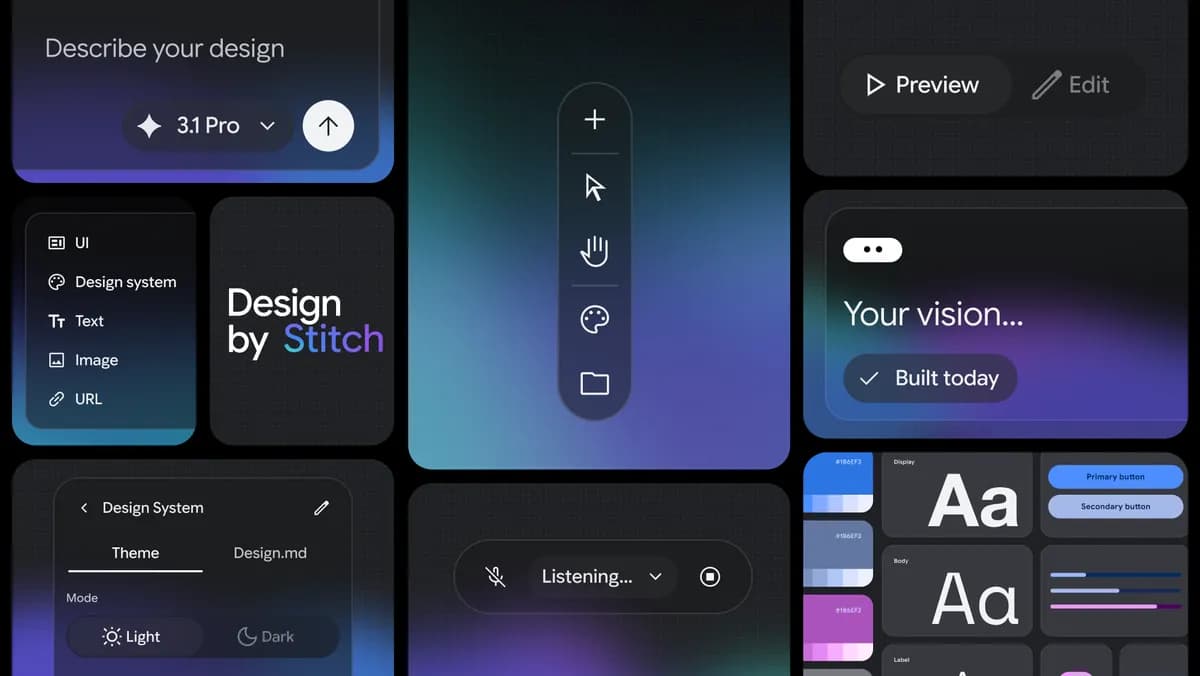
Google's Stitch empowers users to transform text and voice input into interactive prototypes without coding. This AI-driven platform reshapes UI design.
Google's Stitch isn't just another AI tool. It's a groundbreaking platform that's poised to redefine the way user interfaces are created. Imagine transforming plain text or even voice commands into clickable prototypes without the need for any design or coding expertise. That's the power Stitch is putting into the hands of everyday users.
A New Era in UI Design
The AI-AI Venn diagram is getting thicker with Stitch's innovative capabilities. By converting simple text descriptions into functional user interfaces, Google's tool democratizes design. This isn't a partnership announcement. It's a convergence of AI and design, offering unprecedented accessibility to UI creation. No longer do individuals need to rely on skilled designers or developers to bring digital concepts to life. This shift could see a wave of creativity unleashed as accessibility barriers are removed.
Why This Matters
Why should this matter to you? Consider the entrepreneurial potential locked behind technical skills. With Stitch, the gates are flung open. Anyone with an idea can now prototype and test their concepts quickly and efficiently. The compute layer needs a payment rail, and in this case, that 'rail' is the user-generated input that Stitch translates into interactive designs.
Stitch could transform industries reliant on rapid prototyping. Startups, schools, and small businesses stand to gain immensely. Think about how this might impact time-to-market for fledgling apps or the educational implications for teaching design principles.
Empowering the Creative Process
If agents have wallets, who holds the keys? In the context of Stitch, the AI becomes the agent, holding the keys to a previously gated creative process. It's about autonomy and enabling creators to iterate without waiting on technical resources. This isn't just a shift in design methodology. it's a movement towards agentic creativity, where imagination is the only limit.
But here's the pointed question: Will traditional design roles become obsolete, or will this technology enhance them? While some might fear AI encroaching on creative jobs, it's more likely that tools like Stitch will augment human creativity, not replace it. By taking over repetitive tasks, designers can focus on more strategic, impactful work.
We're building the financial plumbing for machines, and in this case, that infrastructure is enabling the effortless transition from idea to execution. Google's Stitch is at the forefront of this evolution, setting a new standard for what's possible in AI-driven design.
Get AI news in your inbox
Daily digest of what matters in AI.