Google Translate's New Tools: A Lesson in Language Hubris
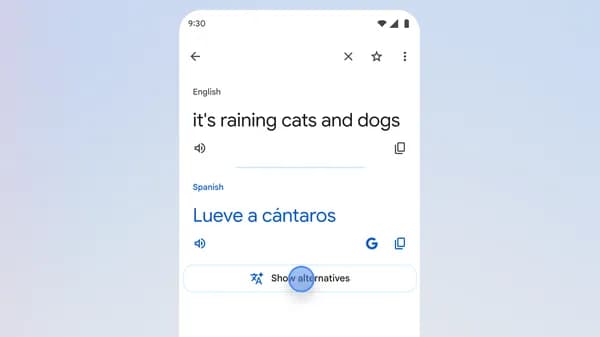
Google Translate adds 'understand' and 'ask' buttons. Are they helping us communicate or just fueling tech's language delusion?
Google's latest update to its Translate service introduced the 'understand' and 'ask' buttons as if we needed more buttons to click in our quest for linguistic enlightenment. These tools are supposed to help ities of natural language. But do they really? Or are we just witnessing another chapter in tech's ongoing saga of overpromising and underdelivering?
Understanding Language, or So They Claim
In a world where we're all supposed to be polyglots by tapping a screen, Google throws in the 'understand' button. They claim it's designed to help users grasp nuanced translations. Naturally, I can't help but wonder if this is just another step in the digital grift, where the promise of AI is as inflated as a balloon in the Macy's Thanksgiving Day Parade.
Sure, AI can decode language. But understanding? That's a different beast. Language isn't just words and grammar. it's culture, context, and history. Can an 'understand' button really bridge that gap? Or is it merely a shiny gadget offering the illusion of comprehension?
The 'Ask' Button: A Shortcut to Confusion?
Then there's the 'ask' button. A feature aimed at letting users query about language use in different contexts. With AI poised as the omniscient oracle, who needs language teachers anymore? But here's where the hubris comes in. AI doesn't 'know' context in the human sense. It predicts based on patterns, statistics, and data, far from the intricate nuances real-life conversations bring.
Spare me the roadmap of AI wisdom. Google might argue this feature will democratize language learning. But isn't this just another way to over-rely on technology while undervaluing human interaction? Are we teaching machines to communicate, or are we just dumbing down our own linguistic skills?
Why It Matters
With these updates, Google Translate is nudging society towards a future where AI is the go-to for language questions. But what's the cost here? Are we sacrificing authentic cultural exchange for convenience? I've seen enough tech promises crumble and leave us with nothing but buzzwords and unmet expectations.
In the end, Google's update might be celebrated as a technological advance, but it's also a stark reminder of how we overestimate AI's capabilities. So, while these new buttons might seem like progress, they're also a lesson in the limits of technology the depth of human language. Which seems like an even stronger argument for valuing real-world language learning over digital shortcuts.
Get AI news in your inbox
Daily digest of what matters in AI.