Germany's Robotics Industry Hits a Snag: Can It Bounce Back?
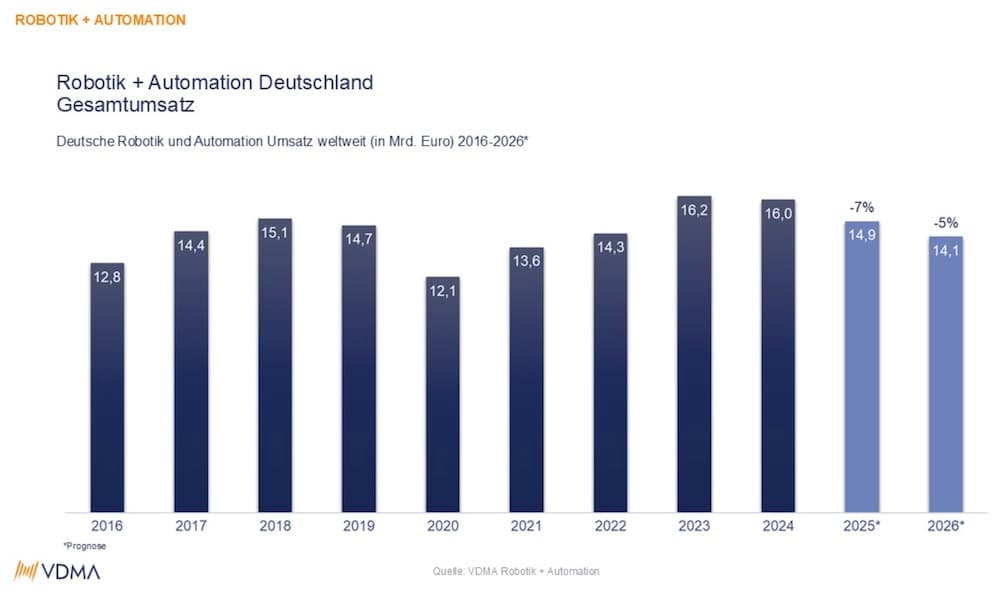
Germany's robotics sector faces a tough 2026 with revenue set to fall. Challenges include weak demand and rising competition from Asia. Long-term growth hinges on strategic changes.
Germany's robotics and automation industry is bracing for another challenging year. According to the VDMA Robotics + Automation Association, revenue is expected to dip by 5% in 2026, landing at about €14.1 billion. This forecast follows a 7% slump in 2025, marking back-to-back years of struggle for one of the globe's leading robotics hubs.
The issues run deeper than a mere economic slowdown. Industry insiders point to sluggish demand from key clients, compounded by geopolitical tensions and economic uncertainties, as the main culprits. These factors have made companies hesitant to invest in new automation technologies.
The Struggle for Competitiveness
Dr. Olaf Munkelt, the VDMA chairman, suggests that the sector's hurdles are multi-faceted. "The situation remains challenging," he says, citing weak demand, geopolitical turmoil, and unfavorable location conditions. He emphasizes the need for the industry to revitalize its competitiveness through customer focus, innovation, and swift execution. But can Germany rise to the occasion?
Compounding the problem, Germany's robotics industry is losing its edge on the global stage. Asian counterparts are accelerating faster, eating into the market share. High costs, extensive regulations, and slow decision-making within Europe are seen as the stumbling blocks. It's clear that without addressing these systemic issues, Germany could fall further behind.
Long-Term Optimism Amid Short-Term Gloom
Despite the current gloom, there's a silver lining. Munkelt remains optimistic about the long-term potential. He cites digitalization, AI, smart production, and automation as enduring growth drivers. But here's the kicker: without immediate action on deregulation and cost competitiveness, these opportunities might slip through Germany's fingers.
According to the International Federation of Robotics (IFR), Germany is still the largest robotics market in Europe and ranks fifth globally. In 2024, robotics installations fell 5% to 26,982 units, but it still held a 32% market share of Europe's annual total. So, the foundation is there, but can Germany capitalize on it?
North America Shows a Different Picture
Meanwhile, across the Atlantic, the North American robotics market is bouncing back. In 2025, robot orders climbed, reflecting a 6.6% increase in units and a 10.1% boost in revenue. This resurgence signals renewed faith in automation as a long-term competitive strategy. Could Germany take a page from North America's playbook?
Ultimately, the real story is about strategic shifts. Germany's robotics industry sits at a crossroads. The pitch deck might highlight growth drivers, but what's the action plan? Without timely reforms, Germany risks falling behind. The question isn't just about survival, it's about reclaiming leadership.
Get AI news in your inbox
Daily digest of what matters in AI.