Festo's HPPH Gripper: A breakthrough for Collaborative Robots
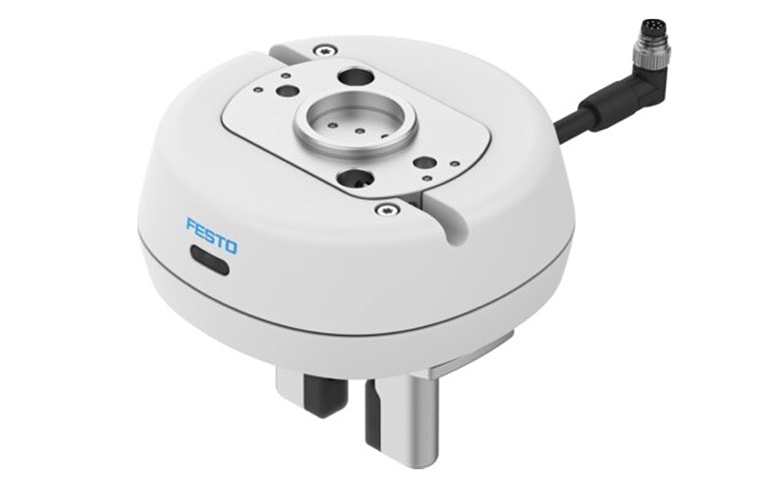
Festo's new HPPH gripper integrates controls and sensors directly into its body, optimizing payloads for collaborative robots. Paired with GripperAI, it promises to redefine material handling.
Festo's HPPH pneumatic gripper is more than just a piece of hardware. It's a strategic move to address the persistent limitations faced by collaborative robots, or cobots. The HPPH gripper integrates everything a robot arm needs right into its body, controls, sensors, even certified safety functions. This isn't just an upgrade. It's a consolidation that enhances performance while reducing weight.
Why Integration Matters
Traditional pneumatic grippers often come with a burden: external components that add unnecessary weight and complicate installation. The HPPH addresses this by integrating its pneumatic control valve and sensors directly inside. That means less wiring, fewer headaches, and more payload capacity for your cobot.
With the HPPH weighing in at just 1.5 pounds but capable of handling objects up to 2.2 pounds, it's clear Festo is solving a real problem. The gripper was developed in line with ISO/TS 15066, ensuring it meets stringent safety requirements. But here's the kicker: it can toggle between safe, collaborative mode with a force equivalent to a firm handshake (31.5 lbf) and a more powerful mode for non-collaborative tasks.
So, why does this matter? Because it brings flexibility to industrial operations, allowing businesses to maximize the efficiency and safety of their cobots without sacrificing performance.
GripperAI: The Software Advantage
Festo isn't stopping at hardware. Its GripperAI software complements the HPPH by making robots smarter and more adaptable. No programming or teach-in training required. This AI-driven tool determines the best grasping points for objects, making material handling smoother and more intuitive.
GripperAI's promise lies in its versatility. Compatible with a wide range of robots and kinematic systems, it even supports automatic tool changes for tailored end-effector tasks. From logistics to manufacturing, it aims to eliminate setup time and human intervention. But the real question is, can it truly handle the chaos of a dynamic warehouse environment?
Into the Future with Edge Computing
GripperAI leverages edge computing, needing just a 3D RGB-D camera and a basic CPU for simpler tasks. For more complex operations, enhancing your setup with high-end GPUs and cameras boosts performance. The software can operate on robot CPUs, industrial PCs, or even within the camera itself. That's flexibility worth noting.
The Würth Group has already tested GripperAI, using robots to sort and pack items without pre-programmed data. This real-world application demonstrates the software's capability, indicating a future where robots become indispensable in logistics and manufacturing environments. Festo's advancements suggest a shift in how we think about robotic integration and performance. GripperAI isn't just an add-on. It's a leap forward.
Get AI news in your inbox
Daily digest of what matters in AI.