Embracing AI Madness: When Algorithms Join the Bracket Party
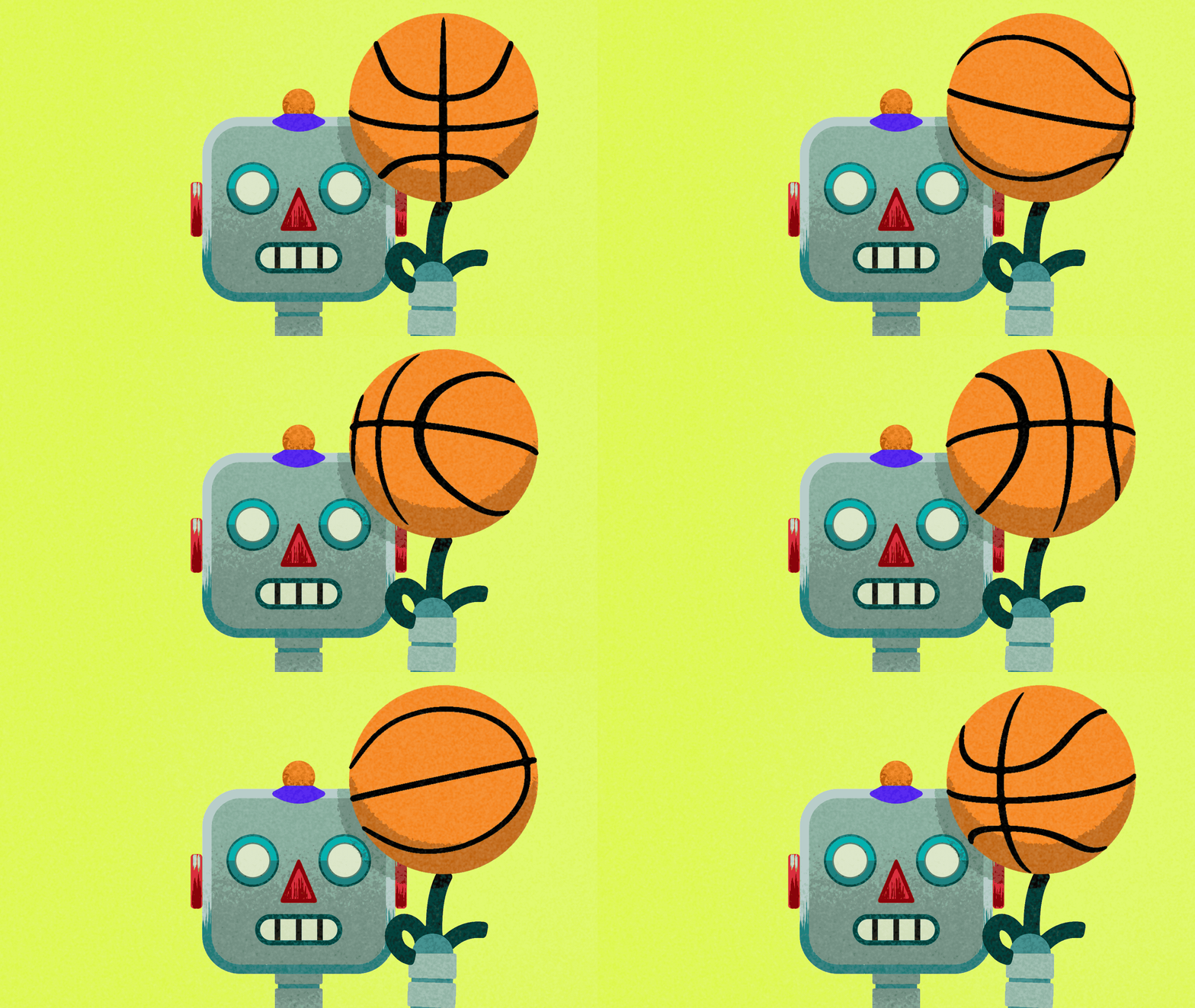
As AI steps into the March Madness fray, 37% of fans are betting their brackets on it. But can it truly predict the unpredictable, or is it just another tool in the chaos kit?
March Madness is upon us and, naturally, people are turning to artificial intelligence to decipher the chaos. According to a survey, 37% of folks will solely rely on AI to fill out their brackets. In a world where algorithms attempt to bring order to sports anarchy, who could resist the allure of machine logic?
The Reality Check
Sheldon H. Jacobson, a computer science professor, tells us AI isn't the oracle you might wish for. 'AI isn't designed to predict random events,' he says. It's the pattern-seeking missile of the tech world, not a crystal ball.
This isn't a Hollywood movie where the sentient AI saves the day. AI can analyze and simulate millions of brackets, sure, but for telling you if Gonzaga's going to choke again? Flip a coin. The press release said innovation. The 10-K said losses.
AI Strategies: Use with Caution
So, if AI isn't the all-seeing eye, what's the point? It's about spotting patterns, crunching numbers, and analyzing historical data. Platforms like ESPN's tournament tools and Jacobson's BracketOdds provide fertile ground for AI-assisted bracket creation.
Fancy using ChatGPT or Google's Gemini? Go ahead. Let them trawl through NCAA trends or injuries. Just remember, these chatbots need a chaperone. They're more reliable now than last year's models, but fact-checking remains non-negotiable. I've seen enough to know that overconfidence is the AI user's enemy.
Pro Tips from the AI Trenches
Jacobson suggests a strategy that even the machines would admire. Start with the Final Four or Elite Eight. Work backward. This approach prevents the rookie mistake of predicting too many early upsets, leaving you with a reasonable bracket instead of a fantasy.
Here’s a rhetorical twist: If AI's not the seer of March Madness, why rely on it at all? The answer lies in its role as a diligent assistant rather than a definitive guide. Treat AI as your sports analyst, not your sports psychic.
This year, ChatGPT, Claude, and Gemini can fill out brackets with remarkable accuracy. But remember, handing over your brackets to AI without oversight is like letting a monkey try to solve a Rubik's Cube. It’s fun to watch, but don’t expect perfection.
In the end, AI's value lies in augmenting your own not-so-magical powers. Use it cleverly, and maybe, just maybe, you’ll avoid being the office bracket joke.
Get AI news in your inbox
Daily digest of what matters in AI.
Key Terms Explained
The science of creating machines that can perform tasks requiring human-like intelligence — reasoning, learning, perception, language understanding, and decision-making.
Anthropic's family of AI assistants, including Claude Haiku, Sonnet, and Opus.
Google's flagship multimodal AI model family, developed by Google DeepMind.