Drones: The New Arsenal Changing Warfare
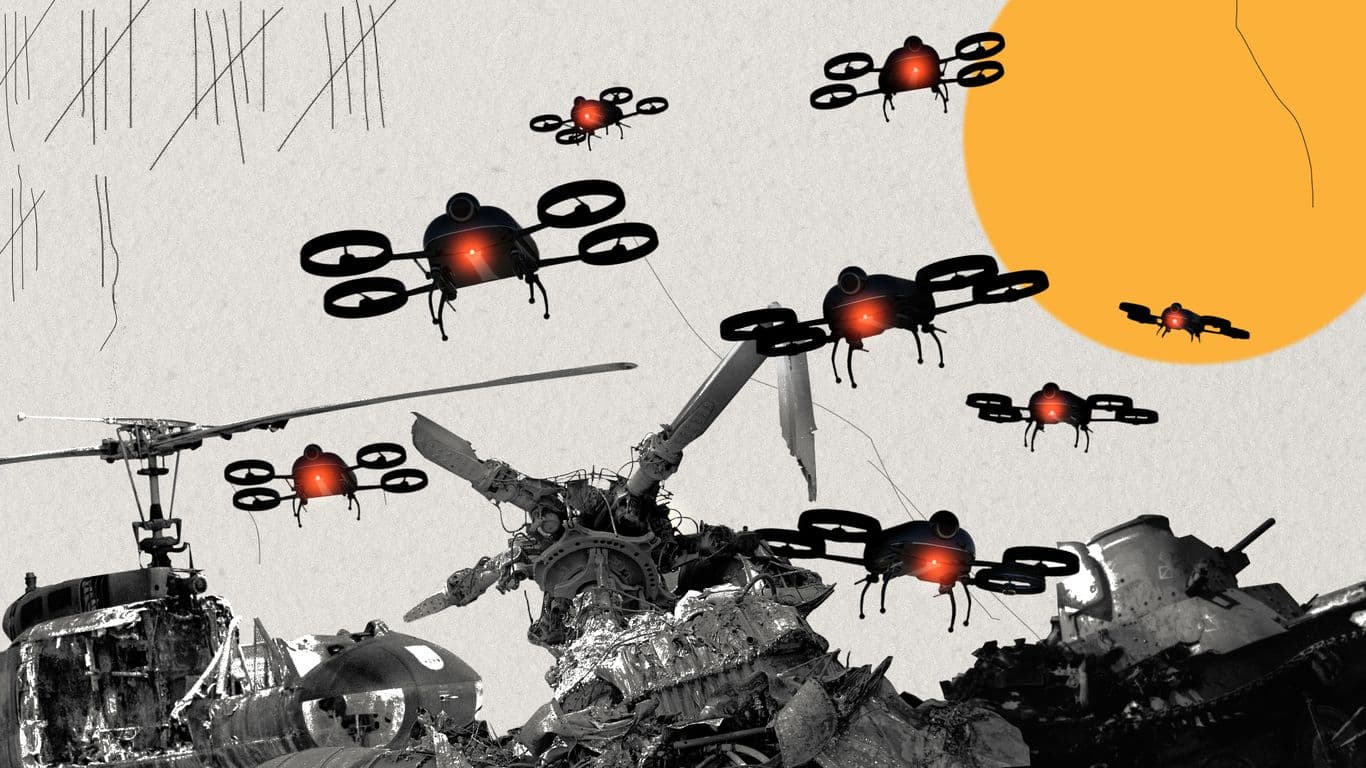
In the era of cheap, mass-produced drones, the balance of military power is shifting. These small machines have become equalizers, allowing smaller forces to challenge superpowers.
Cheap, mass-produced drones have fundamentally altered modern warfare. They've become force multipliers, transforming smaller, seemingly outmatched forces into formidable adversaries.
The Equalizer in Conflict
The impact of drones can be seen across various conflicts. In Ukraine, the presence of these devices is what's keeping Russian forces from overwhelming the nation with sheer manpower and firepower. Similarly, the Houthi rebels in Yemen have managed to disrupt global shipping routes, a feat unimaginable without drone capabilities. Even Iran, isolated and heavily sanctioned, has been able to challenge the most formidable military powers in history.
The size of an army no longer guarantees victory. With access to commercial components and some cash, any small nation or rebel group can now inflict significant damage and costs on larger, more powerful adversaries. This is a dramatic shift in military strategy and economics.
The Shahed's Impact
Iran's Shahed drones, priced between $20,000 and $50,000, have become the regime's strategic leveler. These drones compel the U.S. and its allies to deploy expensive interceptor missiles, sometimes costing millions. During the first week of the Iran conflict, Tehran launched nearly 2,000 drones targeting U.S. bases and infrastructure across 12 countries, highlighting the drone's strategic importance.
For the U.S., this presented a stark realization of the gaps in drone defense capabilities, as evidenced by the lethal strike on a U.S. operations center in Kuwait. The phrase, "we basically had no drone defeat capability," resonates as a call to arms for military innovation.
A Global Response
The Shahed drones were already battle-tested before Iran's direct involvement. Russia, for instance, imported thousands of Shahed drones and even established a factory to mass-produce its own version, the Geran, for use against Ukrainian cities. The Houthis in Yemen used similar tactics, deploying their Waid drones to disrupt Red Sea shipping. In response, the U.S. reverse-engineered these designs, creating the LUCAS drone to counter Iranian threats.
It's clear that drones aren't merely tools. they're indispensable elements of modern warfare, as stated by CENTCOM commander Adm. Brad Cooper. But are nations truly prepared for the next steps in this technological arms race?
Looking Forward
Ukraine, with its four years of experience battling Russian drones, has emerged as a leader in anti-drone technology. The U.S., initially hesitant, has now embraced Ukrainian expertise, deploying specialists to the Middle East to train allied forces. The U.S. has also sent 10,000 Merops interceptor drones, each costing about $14,000, to counter Iranian attacks, demonstrating a cost-effective approach to drone warfare.
While the Pentagon reports a 95% decrease in attacks, this is only the beginning. As Oleg Rogynskyy, CEO of defense-tech company UForce, suggests, drones are just one aspect of a future battlefield that includes maritime drones, aerial hunters, and ground robots, all coordinated by AI. How nations adapt to this new reality will determine their place in future conflicts.
Get AI news in your inbox
Daily digest of what matters in AI.