Drone-Boat Rescues Apache Crew: The Future of Warfare?
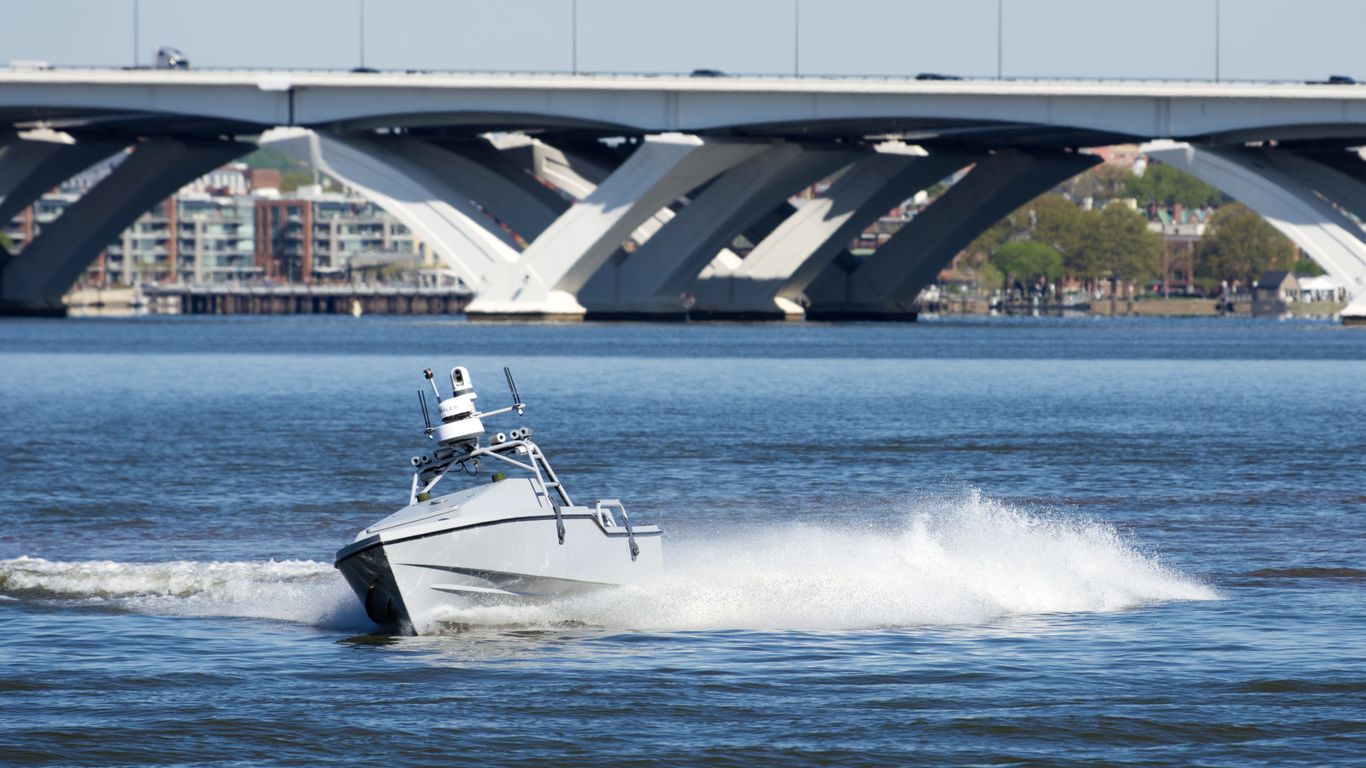
In a groundbreaking rescue operation, a U.S. Apache helicopter crew shot down by Iran was saved by an autonomous drone-boat, hinting at the future of military operations.
In an unprecedented rescue mission, a U.S. Apache helicopter crew, shot down by Iran, found an unlikely savior, a drone-boat known as the Corsair. This event could signal a shift in military operations where humans and machines increasingly work in tandem.
A New Era of Warfare
This rescue operation wasn't just a lifesaving mission. It was a glimpse into the future of warfare. Corsair, an autonomous vessel operated by the Navy's Task Force 59, provided a lifeline to the downed crew. Task Force 59 has been experimenting with unmanned technology and AI since 2021, aiming to integrate these into naval operations. This successful mission might just be the proof of concept they needed.
The Corsair, unveiled in October 2024, is quite the engineering feat. At 24 feet long, it can travel 1,000 nautical miles and carry up to 1,000 pounds, reaching speeds over 35 knots. Compared to Saronic's earlier models, Spyglass and Cutlass, the Corsair is significantly larger, with its fuel alone weighing more than the other models combined.
High Stakes in the Middle East
The stakes couldn't have been higher. Central Command, responsible for U.S. military operations in the greater Middle East, confirmed the Corsair's role in transporting the crew to safety. Both crew members are reportedly in stable condition. President Trump has blamed Iran for downing the Apache, a Boeing creation, and has promised a military response. It's a tense situation with significant implications for U.S.-Iran relations.
But here's the real story. The Corsair's involvement in such a high-stakes mission underlines the evolving role of autonomous machines in warfare. Was it fully autonomous during the rescue? That remains unclear. Yet, it raises an essential question: how comfortable are we with machines making life-and-death decisions?
Follow the Money
Saronic, the company behind the Corsair, recently inked a $392 million contract with the Navy for drone-boat production. With CEO Dino Mavrookas at the helm, a former Navy veteran with SEAL Team Six experience, Saronic is poised to become a key player in naval warfare innovation.
As the Navy pushes for a hybrid fleet of manned and unmanned ships, this contract could be just the beginning. The Navy's vision is clear: a future where human ingenuity and machine efficiency work hand in hand. But can they achieve it without compromising human oversight?
While the Corsair's striking capabilities are impressive, it's the broader implications that warrant attention. The intersection of AI and military operations isn't just inevitable. it's already here. The real challenge will be balancing technological advancements with ethical considerations. The gap between the keynote and the cubicle is enormous. Are we ready to bridge it with machines at the helm?
Get AI news in your inbox
Daily digest of what matters in AI.