Cobots: The Future of Automation or Just Another Tech Mirage?
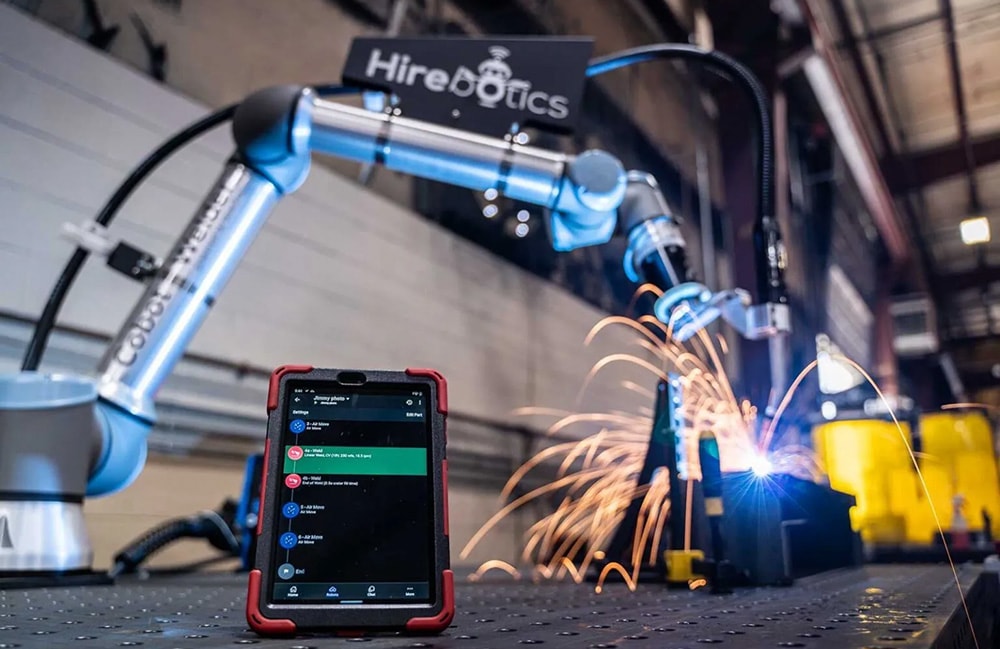
Collaborative robots, or cobots, are reshaping industries from metal fabrication to construction. But are they the workforce saviors they're hyped to be?
In the glossy world of robotics, cobots are the new darlings. Collaborative robots, with their promise of revolutionizing industries like metal fabrication and construction, are now making up 18% of the North American robot scene. A bold leap from the barely-there numbers just a decade ago.
The Rise of Cobots
According to the Association for Advancing Automation, cobots are seeing a surge in non-automotive sectors. Food and consumer goods, semiconductors, electronics, and life sciences are all clamoring for their metallic embrace. But let’s talk about Hirebotics. This Nashville-based player is making waves with its cloud-connected cobots, particularly in welding and fabrication.
Matt Bush, the fresh CEO at Hirebotics, is betting big on these force- and power-limited robot arms. The company launched as a response to labor shortages in 2015, asking the provocative question: What if robots could be hired like people? The answer seems to be a resounding yes.
The Real Deal with Cobots
Here’s where things get interesting. Cobots started off as bare-bones tech, requiring users to figure out how to make them work with existing systems. Today, they come as plug-and-play wonders, no PhD required. The shift towards accessible, turnkey solutions mirrors a broader trend: making automation user-friendly.
But the real kicker? Cobots are now stepping into roles that are as glamorous as a Monday morning, think powder coating in sweltering heat. While humans tend to flee these tedious tasks, cobots dive in with gusto, saving human talent for more creative endeavors.
Human vs. Machine
Are workers trembling in their boots, fearing a robot takeover? Not quite. In the dance between human and robot, companies are finding that cobots act more like partners than usurpers. Bush claims that cobots are actually driving employment, allowing companies to take on more work and freeing human welders to focus on high-value tasks.
But let’s not get ahead of ourselves. While cobots can weld a staggering 90 inches per minute, they’re not about to replace the nuance of human judgment any time soon. They’re good at repetitive tasks but fall short where creativity is required. Naturally, this makes the trade more attractive to the tech-savvy youth, blurring the lines between man and machine.
The Cobotic Challenge
So, what's stopping cobots from taking over the world? Well, companies often trade one problem for another. They rid themselves of the welder shortage only to find themselves hunting for robot programmers. Hirebotics tackles this by designing systems operable via smartphone or tablet, bypassing the need for complicated programming. Spare me the roadmap, just give me a cobot that works.
As we look to the future, cobots are expected to become more adaptive with advancements in AI. But with only 4-5% market penetration, there's a vast horizon of untapped potential. The question is, will they live up to their promise or just be another tech industry mirage?
Get AI news in your inbox
Daily digest of what matters in AI.