Cobots in Metal Fabrication: Revolution or Pipe Dream?
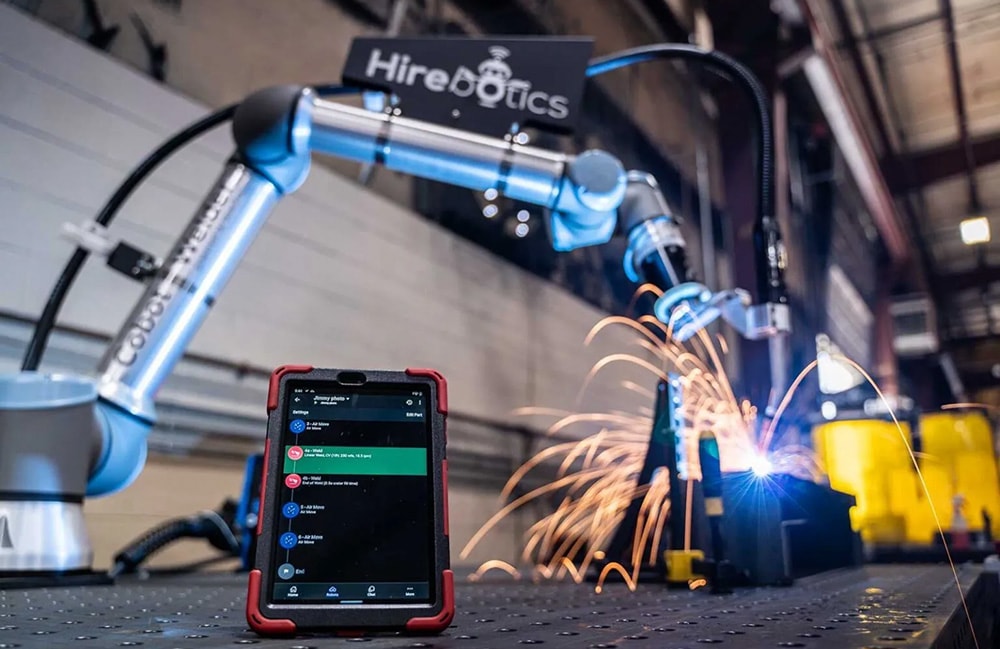
Cobots are making waves in manufacturing, with companies like Hirebotics leading the charge. But are these collaborative robots truly the big deal they're hyped up to be, or just another tech fad?
Collaborative robots, or cobots, are gaining traction like never before. They now account for 18% of all robot units in North America, a figure that's hard to ignore. Driving this surge is a shift away from the automotive sector, with industries like food, semiconductors, and life sciences eagerly adopting these bots. The metal fabrication scene is particularly enthusiastic. But is this enthusiasm justified, or are we just witnessing yet another tech trend?
The Hirebotics Approach
Enter Hirebotics, a Nashville-based company that's making waves in the cobot world. Founded in 2015, they tackled a problem many manufacturers face: the labor shortage. Their answer? Robots that can be hired like people. No programming. No engineers required. Just a smartphone interface that welders can use. Sounds like a dream, right? But the real question is, how sustainable is this model?
According to Matt Bush, Hirebotics' co-founder, the company's cobots are designed with operators in mind. They focus on making automation intuitive, eliminating the need for complex programming. This might sound like a relief for many, but what happens when the novelty wears off? Are companies ready to handle the long-term challenges of integrating such systems?
Real-world Applications and Challenges
Cobots are already being deployed in areas like machine tending and palletizing, with a significant uptick in welding applications since 2021. They're even making inroads into construction, taking on tasks that traditionally required human labor. The pitch is simple: robots handle the grunt work, humans focus on quality and creativity. Yet, the reality might not be so rosy. The promise of cobots as a cure-all for labor shortages is misleading. While they can boost efficiency, they also introduce new challenges. Companies find themselves trading one headache for another: from finding welders to finding robot programmers.
This ends badly. The data already knows it. Overreliance on cobots could lead to overextension. Companies might find themselves struggling with maintenance, updates, and scaling issues. The excitement over cobots could very well lead to exhaustion, with firms realizing the hidden costs and complications too late.
The Future of Cobots
Looking ahead, Hirebotics sees AI playing a essential role in making cobots more adaptive, possibly lowering the need for precise programming. But does this suggest a future where cobots become so autonomous that they replace more jobs than they create? If cobots are to truly revolutionize industries, they need to evolve beyond their current capabilities, ensuring they add value rather than just replace manpower. Zoom out. No, further. See it now?
As it stands, only 4% to 5% of the potential market is tapped. This suggests a massive growth opportunity, but it's also a warning. Are industries ready for the challenges that come with such a rapid shift? Or are we simply bullish on hopium, hoping cobots are the silver bullet when the math suggests otherwise?
Get AI news in your inbox
Daily digest of what matters in AI.