AW 2026: South Korea's Robotics Surge Redefines Manufacturing
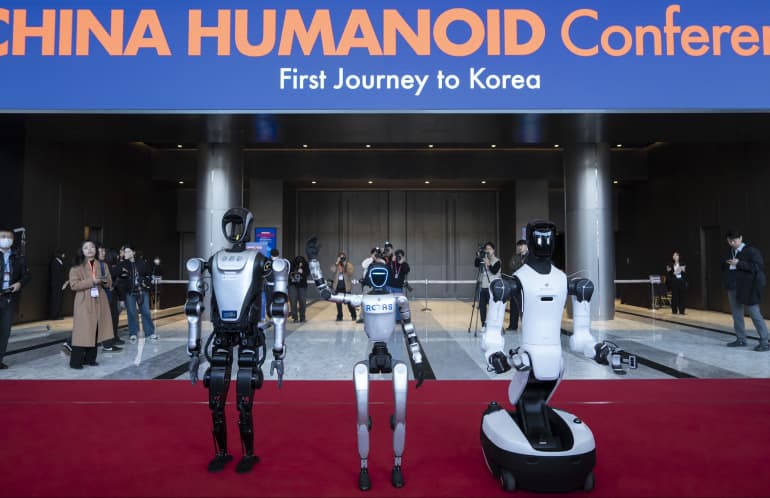
AW 2026 in Seoul marks a important shift in manufacturing with the integration of AI and robotics. Industry leaders showcase humanoid robots and AI-driven systems, signaling a transformative era.
In Seoul, the AW 2026 expo is redefining the future of manufacturing with a strong focus on AI and robotics. Held at the sprawling Coex venue, this year's event is the largest in its 36-year history, featuring 2,300 booths and attracting about 30,000 attendees. The theme, 'Autonomy: the driver of sustainability,' emphasizes a shift from traditional automation towards intelligent, adaptable systems with minimal human intervention.
The Pivot to Physical AI
Gone are the days when AI was just about software. At AW 2026, the focus is on embedding AI directly into robots and production facilities. This is the 'Physical AI' era where intelligent, self-learning systems are transforming the factory floor. It's not just talk. Companies like POSCO DX and CJ Olivenetworks are demonstrating real-world applications in the new AI Factory Pavilion, integrating digital twins and data-driven process controls.
Here's what the deployment actually looks like. Robots are now more than automated machines. they're learning, adapting, and making decisions in real-time. The gap between pilot and production is where most fail, but AW 2026 promises to bridge this gap by showcasing how AI can enhance manufacturing efficiency and flexibility.
Humanoids Take Center Stage
Humanoid robots are making significant waves at the expo. Boston Dynamics' Atlas and T-Robotics' humanoid robots are attracting considerable attention. Notably, Chinese models like the Agibot X2 and Unitree G1 are in the spotlight, offering insights into global commercialization strategies. Why does this matter? Because these humanoids aren't just novelties. they're prototypes of the future workforce that could revolutionize industries.
The ROI case requires specifics, not slogans. The consulting deck says transformation, but the P&L says different. For enterprises, it's not about the robots themselves but the outcomes they deliver. These humanoids represent potential shifts in labor dynamics, efficiency, and even the global competitiveness of manufacturing industries.
Hyundai's Logistics Leap
Hyundai Motor Group isn't just a participant but a leader in this transformation. At AW 2026, Hyundai showcased its MobED platform, an innovative logistics solution that combines robotics and AI. With plans to integrate tens of thousands of robots from its Boston Dynamics unit, Hyundai is positioning itself at the forefront of this technological wave.
The real cost of ignoring these advancements? Falling behind in a rapidly tech-driven market. Hyundai's demonstration of integrated automation, mobile robots, and AI-based equipment controls highlights a strategic advantage that could redefine logistics and manufacturing processes.
As South Korea aims to boost factory automation by 10% by 2030, government-backed initiatives and investor opportunities are also paving the way for a more automated and competitive industrial landscape. Enterprises don't buy AI. They buy outcomes. AW 2026 is a testament to this shift, offering a glimpse into the future of manufacturing where AI and robotics aren't just tools but central to strategic transformation.
Get AI news in your inbox
Daily digest of what matters in AI.