Autonomous Ottobots: Revolutionizing Deliveries in Australia's Mining Camps
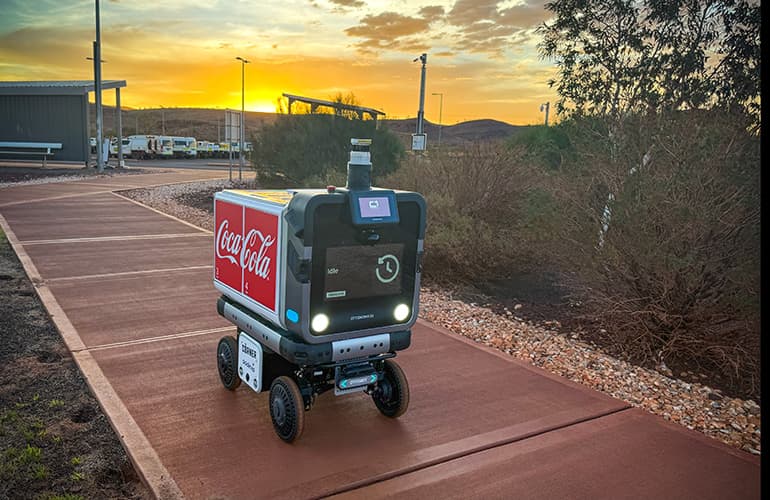
Sodexo Australia is trialing autonomous Ottobot deliveries at Rio Tinto's Gudai-Darri village, offering a glimpse into the future of service in remote areas.
In the rugged expanse of Western Australia's Pilbara region, an intriguing experiment is underway. Residents and guests at Rio Tinto's Gudai-Darri village, a remote mining settlement, are set to experience deliveries by Ottobot robots, an innovation that could reshape service logistics in isolated areas.
A New Approach to Service Delivery
With the aim of reducing on-site staff while enhancing logistical efficiency, Sodexo Australia has introduced this trial of Ottobot delivery robots. Operating in a secluded environment, the village relies heavily on the on-site amenities provided by Sodexo, which includes everything from dining options to a general store. The Ottobot robots promise to add a layer of convenience, allowing workers to order meals and essentials directly through their phones, to be delivered autonomously to their accommodations.
The AI Act text specifies the importance of these innovations, highlighting how technology can bridge the gap in remote service delivery. But is this the best solution for mining camps, or just a technological novelty?
Breaking New Ground in Remote Living
Mining employees at Gudai-Darri, known as 'fly in, fly out' workers, spend extensive periods away from urban comforts, making such amenities not just a convenience but a necessity. The Ottobots, equipped with insulated compartments, could redefine how these workers experience life on-site. As Adrian Lorenzin, a senior director at Sodexo Australia, noted, the focus is on enhancing the hospitality experience for workers, allowing them a semblance of home comforts.
Yet, one must wonder, does this truly enhance quality of life, or does it simply mask the isolation inherent in such remote work assignments?
The Future of Autonomous Deliveries
Developed by Ottonomy Inc., these robots navigate pre-mapped paths at a leisurely walking pace, ensuring safety and operational efficiency. The integration with Sodexo’s existing autonomous retail solutions paves the way for broader adoption of such technologies in remote settings. The potential is undeniable, yet the real test will lie in balancing automation with the human touch that such communities also crave.
The delegated act changes the compliance math, as robotics technology increasingly finds its way into unlikely areas. As partnerships with brands like Coca-Cola and Red Bull show, the commercial potential is enormous. However, the core question remains whether these robots can truly replicate the indispensable human interactions in service delivery.
As we watch this trial unfold, the broader implications for remote industries across the globe are significant. Are we ready for a fully autonomous service workforce in the most isolated parts of our world?
Get AI news in your inbox
Daily digest of what matters in AI.