ASML's High-NA EUV Machines: The Game Changer for AI Chips
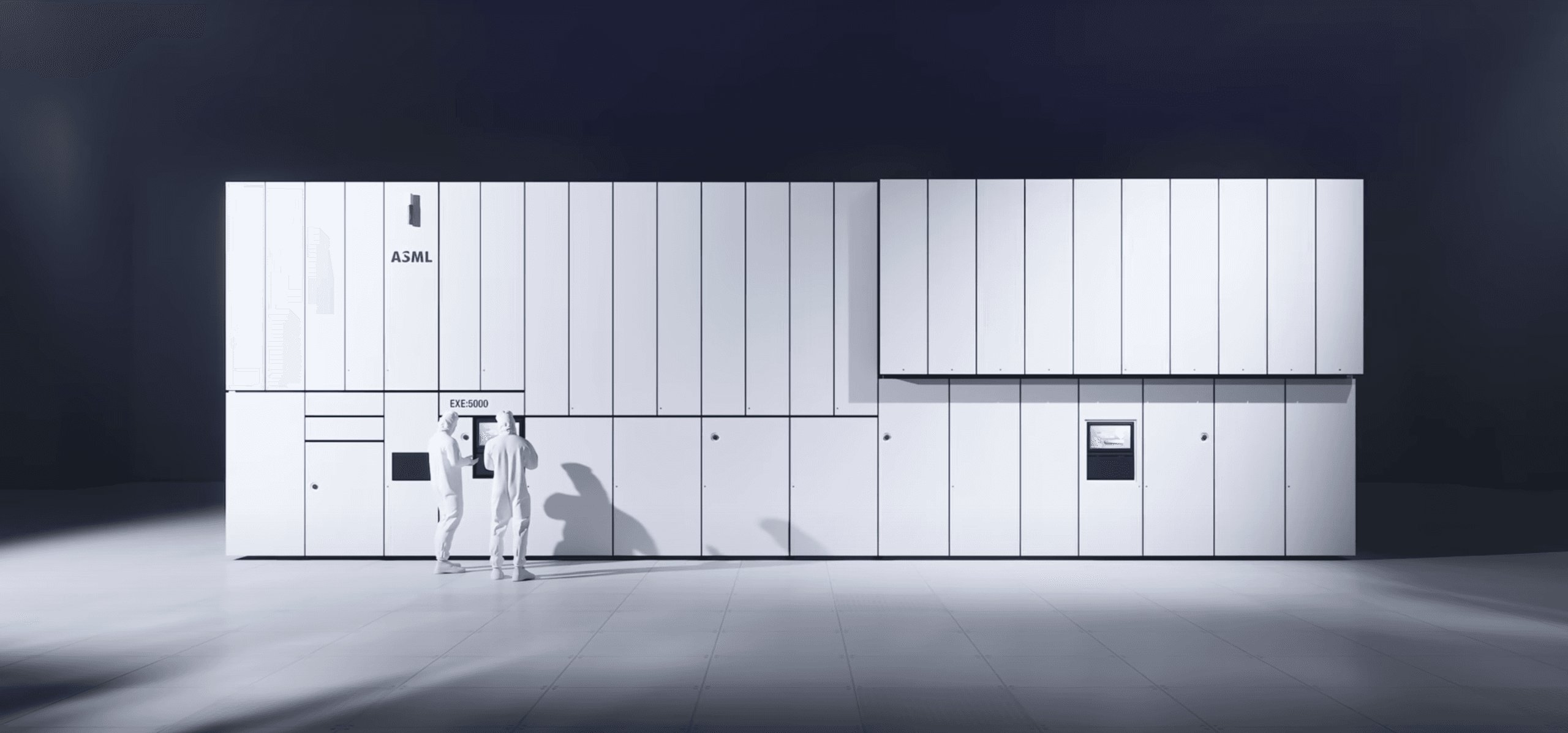
ASML's High-NA EUV tools are ready for mass production, marking a significant leap in AI chip fabrication. This breakthrough promises more powerful chips, but the industry is still a few years from realizing its full potential.
ASML, the Dutch powerhouse in extreme ultraviolet (EUV) lithography, has announced that its next-generation High-NA EUV machines are now ready for mass production. This development isn't just technical jargon, it's a seismic shift in the semiconductor industry, particularly for AI chip manufacturing.
A Leap Forward for AI
The current EUV technology is on the brink of its capabilities, especially fabricating the complex chips needed for advanced AI applications. ASML's High-NA EUV tools are designed to surpass this barrier, offering the ability to etch finer, denser circuits with fewer steps. This directly translates to more potent AI chips, capable of handling increasingly demanding workloads.
Marco Pieters, ASML's Chief Technology Officer, highlighted the significance of this milestone, emphasizing the extensive customer testing these machines have undergone. "I think that it's at a critical point to look at the amount of learning cycles that have happened," Pieters told Reuters, underlining the readiness of these tools.
The Numbers Behind the Move
ASML's confidence in its High-NA EUV tools is backed by solid data. These machines have processed over 500,000 silicon wafers and achieved an 80% uptime, aiming for 90% by the year's end. Their imaging precision reduces multiple conventional patterning steps to a single High-NA pass, a leap forward in efficiency.
However, this latest technology comes at a steep price: around $400 million per unit, twice the cost of current EUV machines. Despite the hefty investment, early adopters like TSMC and Intel are already on board, underscoring the expected impact on the industry.
From Readiness to Reality
While ASML's High-NA EUV tools are technically ready, the journey to full-scale production integration remains a complex one. Pieters noted that chip manufacturers have the necessary know-how to integrate these tools, but the process will take an estimated two to three years.
For the AI sector, the race to integrate these machines into production lines has officially started. The promise of next-gen chip performance is on the horizon, and while it's not yet a reality, the industry is poised to evolve significantly. The question remains: will manufacturers seize this opportunity swiftly enough to meet the burgeoning demands of AI technology?
Get AI news in your inbox
Daily digest of what matters in AI.