Argonne's AI Platform: A New Era for Scientific Research?
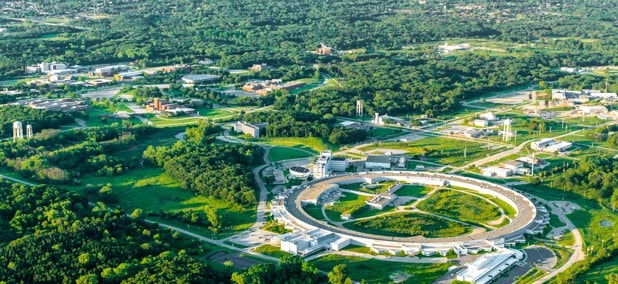
Argonne National Laboratory launches an AI platform to advance research, yet questions remain about accessibility and real-world impact.
Argonne National Laboratory recently unveiled a new AI platform, marking a bold step to bolster the Department of Energy's mission of pushing the boundaries of research and innovation. The platform promises researchers access to a wide array of AI models, signifying a monumental leap forward in scientific computing. But how transformative is this initiative really?
Bridging the AI Application Gap
Michael Papka, director of the Argonne Leadership Computing Facility, claims that this AI inference service will 'close the gap' between model development and practical application in research. Researchers now have the advantage of deploying AI at scale without the cumbersome need for individual infrastructure. The marketing says distributed. The multisig says otherwise. It's a service that could potentially simplify research by offering pre-trained models, thus allowing scientists to focus more on hypothesis testing than on technical setup.
Powerhouse Infrastructure: A Double-Edged Sword?
Argonne plans to tap into its formidable exascale computer, Aurora, alongside the NVIDIA DGX A100 cluster, Sophia, and the SambaNova SN40L chip cluster, Metis. These technological behemoths promise a solid computational backbone. However, let's apply the standard the industry set for itself. Does this infrastructure truly democratize access, or does it privilege those already close to the action? The burden of proof sits with the team, not the community.
Expanding Beyond AI Research
Interestingly, the service extends its utility beyond just AI research. It's a cornerstone of the Genesis Mission, which aims to tap into federal datasets for breakthroughs in fields like fusion energy, chemistry, and materials science. Yet, one has to wonder how many of these grand claims will translate into tangible scientific advancements. Skepticism isn't pessimism. It's due diligence.
access isn't limited to Argonne's own researchers. Colleagues from Los Alamos, Brookhaven, Lawrence Berkeley, Fermi, Lawrence Livermore, Oak Ridge, Sandia, and Thomas Jefferson National Laboratories can also tap into this resource. This broader access could indeed spur collaborative breakthroughs, assuming these institutions can navigate the intricacies of shared AI resources.
Access and Impact: What’s the Real Story?
While the offering is based on a 2025 framework that allows for parallel AI tasks without commercial cloud reliance, questions about long-term accessibility and actual implementation linger. How many researchers will genuinely benefit, and who might be left out? The ultimate test will be in how this platform impacts the real-world pace of scientific discovery. Show me the audit.
Get AI news in your inbox
Daily digest of what matters in AI.