Are Full-Stack Data Scientists the Future of AI Teams?
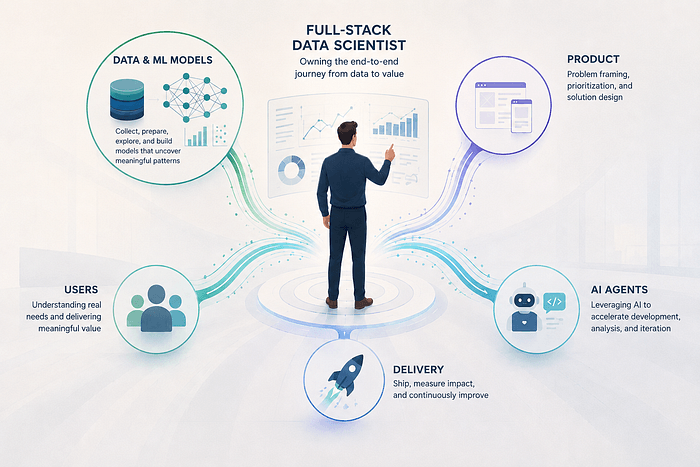
The shift towards full-stack data scientists promises faster iteration and greater accountability, but is this the ultimate solution for data teams? With AI evolving, businesses must decide if this approach is right for them.
It's a familiar tale. For years, constructing data products meant assembling a team of specialists: data engineers, data scientists, software engineers, ML engineers, and MLOps experts. Each had a niche, and while specialization tackled complexity, it also added layers of handoffs and delayed feedback. Is that model sustainable in today’s rapidly changing AI landscape?
The Rise of the Full-Stack Data Scientist
Enter the concept of the full-stack data scientist. This is no mere buzzword. It’s a practitioner who marries data expertise with product thinking and is accountable for outcomes. This individual is supported by rapid prototyping and modern coding agents. What’s the advantage? In practice, it means faster iterations and a direct line to the value delivered.
Data scientists, by nature, operate at the intersection of technology, business, and uncertainty. This makes them well-suited to the full-stack model. They learn swiftly and iterate effectively, traits that are key when ambiguity is the norm.
Ownership and Accountability
So, what does this approach look like on the ground? It’s about building early product interfaces and honing in on measurable value. It’s stakeholder feedback that refines requirements, not a slide deck. The consulting deck says transformation. The P&L says different. Here, enterprises buy outcomes, not just AI.
The agentic era, as some call it, favors teams that align context, data, validation, and iteration. It’s a mindset and a management philosophy. Smaller, capable teams are empowered to own their outcomes. AI boosts execution, but context and judgment remain the key differentiators. Are you ready to trust your team with that kind of responsibility?
A New Way Forward?
While the promise of full-stack data scientists is enticing, one can't ignore the complexities of such a shift. How many organizations are truly prepared to break down the silos that have long defined their workflows? The gap between pilot and production is where most fail. Yet, those who cross it may find that their ability to adapt and learn rapidly becomes a competitive edge.
Here's the rub: not every business will find this approach suitable. The ROI case requires specifics, not slogans. But as AI continues to evolve, organizations must assess whether they’re ready to embrace this change. It's a question of embracing risk for the potential of greater rewards.
Simply put, the real cost of sticking with the status quo could be missing out on the agility and innovation that full-stack data scientists offer. In the end, it’s about outcomes. Enterprises that align their teams with this vision might just find themselves leading the charge in the next phase of AI deployment.
Get AI news in your inbox
Daily digest of what matters in AI.