America's Labor Market: A Volatile Rollercoaster Amid Uncertainty
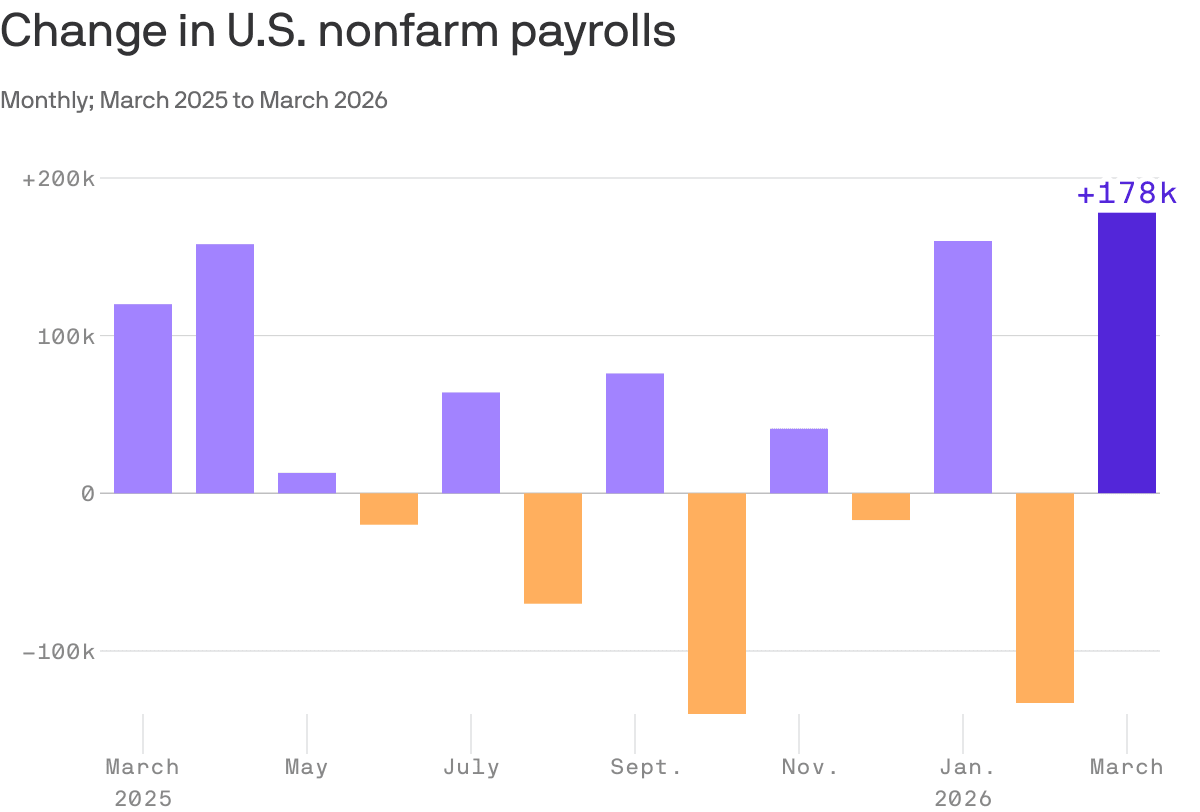
The U.S. job market is oscillating between gains and losses, creating a complex scenario for policymakers and workers. Unemployment remains stable despite choppy hiring, but broader economic forces are at play.
The U.S. labor market has become a puzzling spectacle, veering unpredictably between significant gains and notable losses. A March surge added 178,000 jobs, yet this yo-yo trend belies an unsettling volatility. No longer a market of consistent monthly growth, it's a wild ride driven by external upheavals.
March Jobs Surge: A Closer Look
March's upswing brings a sharp contrast to February's revised 133,000 job loss. Notably, health care led the charge by adding 76,000 positions, accounting for 43% of the month's gains. This spike came as workers returned post-strike, temporarily boosting sector employment. Meanwhile, construction and transportation together contributed 47,000 jobs. But not all was rosy. federal employment continued its decline, shedding 18,000 jobs.
Despite these oscillations, the unemployment rate nudged down to 4.3% from February's 4.4%. On the surface, it appears stable, but with nearly 400,000 leaving the workforce, this drop is partly illusory. The participation rate for prime-age workers dipped to 83.8%, still historically high yet declining for the second month.
The Tug of War: Structural vs. Cyclical Forces
Several forces are pulling at the labor market. AI advancements threaten to phase out entry-level roles, while immigration crackdowns tighten labor availability. Add tariff uncertainties and energy price hikes due to the Iran war, and the market remains in a precarious 'no hire, no fire' state. This benefits those already employed but leaves new job seekers in a bind.
Why is this critical? For one, it challenges the Federal Reserve's policy direction. Should they prioritize combating inflation over spurring job growth? The yield on the two-year Treasury note's rise by 5 basis points post-report indicates that the market sees little need for rate cuts. But with fresh inflationary pressures from the Iran conflict, the Fed's roadmap remains murky.
Looking Ahead: Key Questions
With the labor market teetering on a knife's edge, one must ask: can policymakers steer it to a more stable path? The stakes are high. As the employment landscape shifts, America finds itself at a crossroads. Will innovation and policy adjustments align to create viable solutions, or will more turbulence lie ahead?
Get AI news in your inbox
Daily digest of what matters in AI.