AI's True Potential: It's All in the Interface
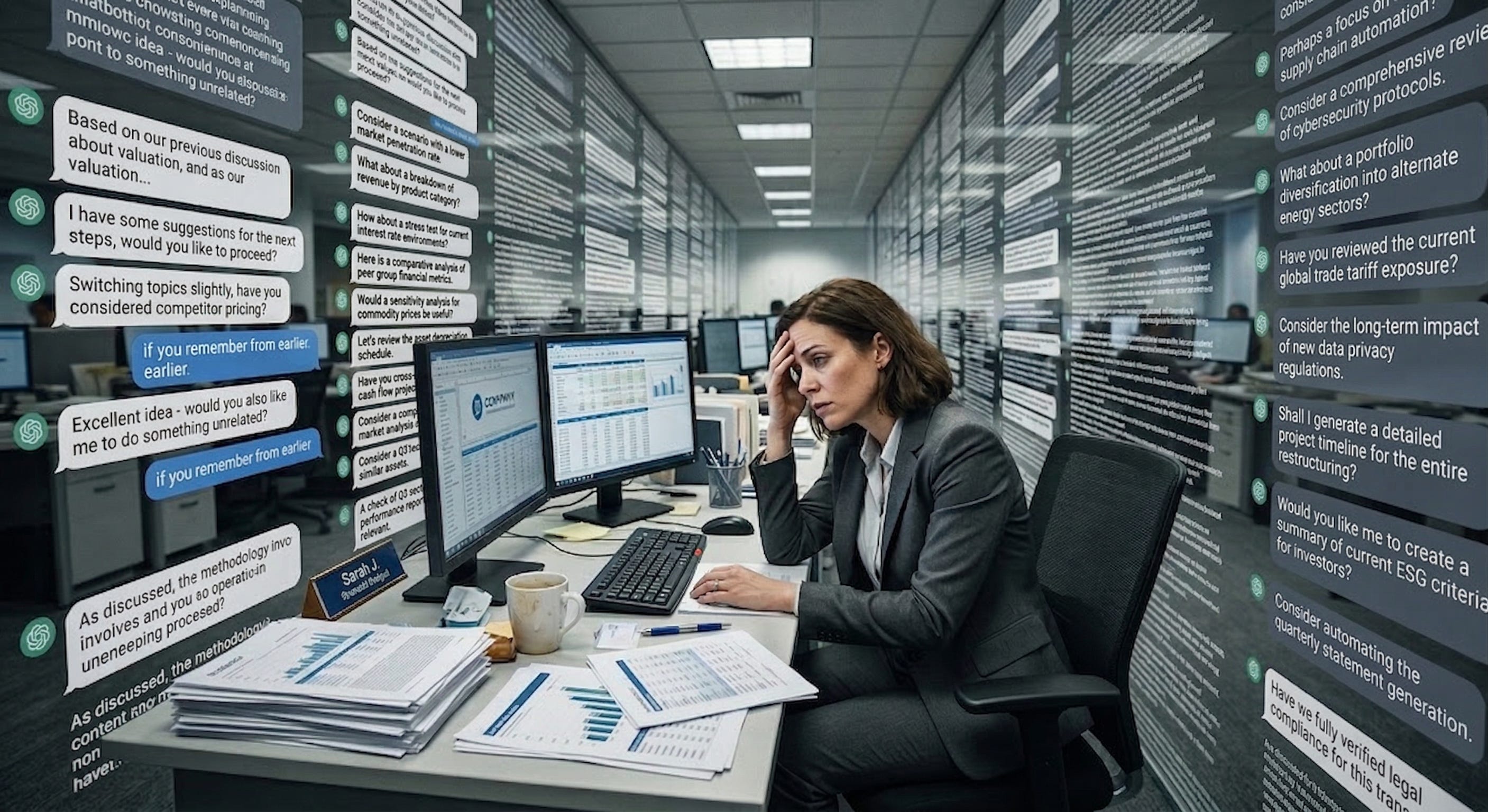
AI chatbots can be overwhelming and inefficient for real work, but specialized interfaces offer a glimpse into a future where AI truly serves us.
AI's capabilities are mind-blowing, yet we often underutilize them. Why? The culprit might not be the tech itself but how we interact with it. Most of us engage with AI through chatbots, which, let's face it, aren't always the best tools for the job.
Recent research highlights a mental tax we pay when using chatbots for complex tasks. Imagine financial professionals trying to complete valuations using GPT-4. The AI was helpful but often overwhelming, drowning users with walls of text and tangential topics. It's like trying to have a focused conversation in a noisy room.
Specialized Interfaces: The Game Changer
Think of it this way: what if the problem isn't the AI's intelligence but the interface we use? Specialized tools designed for specific tasks could transform how we harness AI. Right now, programming boasts the most complete AI interfaces. Tools like Anthropic's Claude Code and OpenAI's Codex allow programmers to work without touching a line of code.
But here's the thing, these tools speak the language of programmers, not your average knowledge worker. They're powerful but inaccessible to many who could benefit. We need interfaces that cater to other professions, and Google seems to get this. Their experimental interfaces, like Stitch and Pomelli, hint at a future where AI tools are designed for diverse fields, from marketing to research.
Familiar Interfaces for Real Impact
Now, let's talk OpenClaw, the open-source AI agent that's breaking records. It's integrated into apps like WhatsApp and Slack, allowing AI to work as a personal assistant through familiar channels. Imagine telling an AI to book a table or find a file just by sending a text. It's revolutionary, yet still in its infancy.
But OpenClaw isn't perfect. It's a security risk and hard to use. Anthropic's Claude Cowork takes a safer approach, linking AI to your desktop and phone. You can ask it to prepare reports or update presentations while you're on the go. It's like having a competent assistant at your fingertips.
The analogy I keep coming back to is AI as an adaptable tool rather than a static one. Picture AI generating the right interface on demand. Instead of rigid designs, we could see AI crafting custom solutions for any task. This isn't just wishful thinking. It's already happening.
The Interface Revolution
We're on the cusp of an interface revolution. As AI becomes more accessible, the gap between capability and usability narrows. The clunky chat windows of today will evolve, allowing more people to tap into AI's true potential. The real question is, are we ready to embrace it?
Get AI news in your inbox
Daily digest of what matters in AI.
Key Terms Explained
An autonomous AI system that can perceive its environment, make decisions, and take actions to achieve goals.
An AI safety company founded in 2021 by former OpenAI researchers, including Dario and Daniela Amodei.
Anthropic's family of AI assistants, including Claude Haiku, Sonnet, and Opus.
Generative Pre-trained Transformer.