AI's Role in Education: Opportunities, Risks, and the Call for Better Governance
As AI reshapes education, countries like Australia and South Korea lead the charge, while challenges like deepfakes and data security demand attention. The real question is whether policymakers can catch up to the rapid pace of AI innovation.
Artificial Intelligence isn't just knocking on the door of education. it's already shaping it in profound ways. As AI becomes more intertwined with educational systems globally, its dual nature of offering immense opportunities alongside significant challenges is increasingly evident. The question now is whether policymakers will match the pace of technological advancement with effective governance.
Global Leaders in AI Education
Australia and South Korea stand out as pioneers in embedding AI within their educational frameworks. In Australia, states have implemented large-scale AI copilots using Azure data sets. These tools aren't only providing personalized learning experiences but also generating valuable data to enhance teaching methods. However, this centralized data approach also heightens the risk of cyber threats.
during a recent UN Education Conference in Paris, the importance of AI model training came to light. Mistral AI underscored the impact of training techniques on educational outcomes, noting their multilingual model as a key differentiator. This insight signals to educational institutions the necessity of aligning AI tools with their unique student needs, avoiding hasty technology acquisitions that may clash with educational values.
Bridging the Educator-Policy Gap
Despite UNESCO's commendable guidance on AI in education, a gap persists between policymakers and educators. As observed in Paris, while educators are adept at using AI tools, policymakers appear out of touch, amazed by basic AI capabilities. This disconnect is troubling in a sector often hampered by insufficient funding. Stakeholder engagement must extend beyond academia to include the voices of teachers actively using AI, ensuring policy decisions are informed by real-world insights rather than abstract research.
Addressing Deepfakes and Data Security
The rise of deepfakes presents a new challenge, with students in the UK and South Korea reportedly creating fake videos of peers and teachers. In response, schools are exploring innovative approaches, such as China's use of deepfake headteachers to educate on the risks involved. Meanwhile, major players like Microsoft and Google face scrutiny over data security. The consolidation of data in educational settings, while promising, creates attractive targets for cybercriminals.
the safeguarding of student data remains a contentious issue. The lack of clear data protection practices from tech giants only exacerbates concerns over privacy and bias in AI systems. Is it acceptable for children's digital safety to take a backseat to commercial interests?
The Future of Education
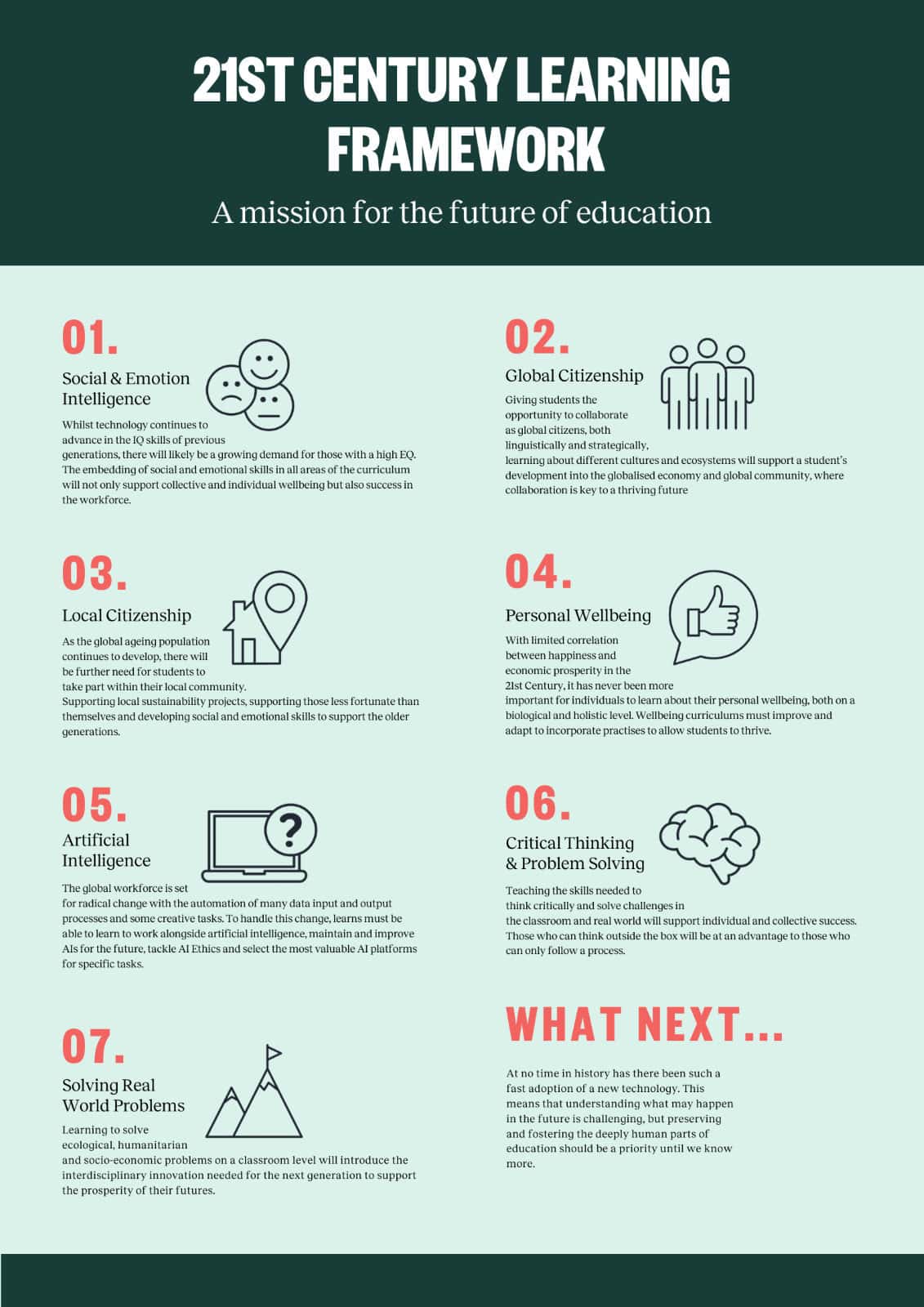
As AI continues to redefine education, what we teach must also evolve. Traditional curricula overly focused on economic outcomes fall short in preparing students for a future driven by technological innovation. Clifton High School in the UK, for instance, has introduced a course that emphasizes skills like emotional intelligence and collaboration, aligned with UNESCO's 21st-century learning framework.
While there's much optimism about AI's potential in education, the rapid pace of integration could lead to adverse outcomes without strong governance. Policymakers must act decisively to prepare the global education sector, as the current trajectory risks leaving experts scrambling to keep up. Legislative efforts such as the EU AI Act provide a promising framework, but companies must prioritize safety over mere compliance.
Get AI news in your inbox
Daily digest of what matters in AI.
Key Terms Explained
The science of creating machines that can perform tasks requiring human-like intelligence — reasoning, learning, perception, language understanding, and decision-making.
A mechanism that lets neural networks focus on the most relevant parts of their input when producing output.
In AI, bias has two meanings.
AI-generated media that realistically depicts a person saying or doing something they never actually did.