AI's New Frontier: The Modern Data Grab
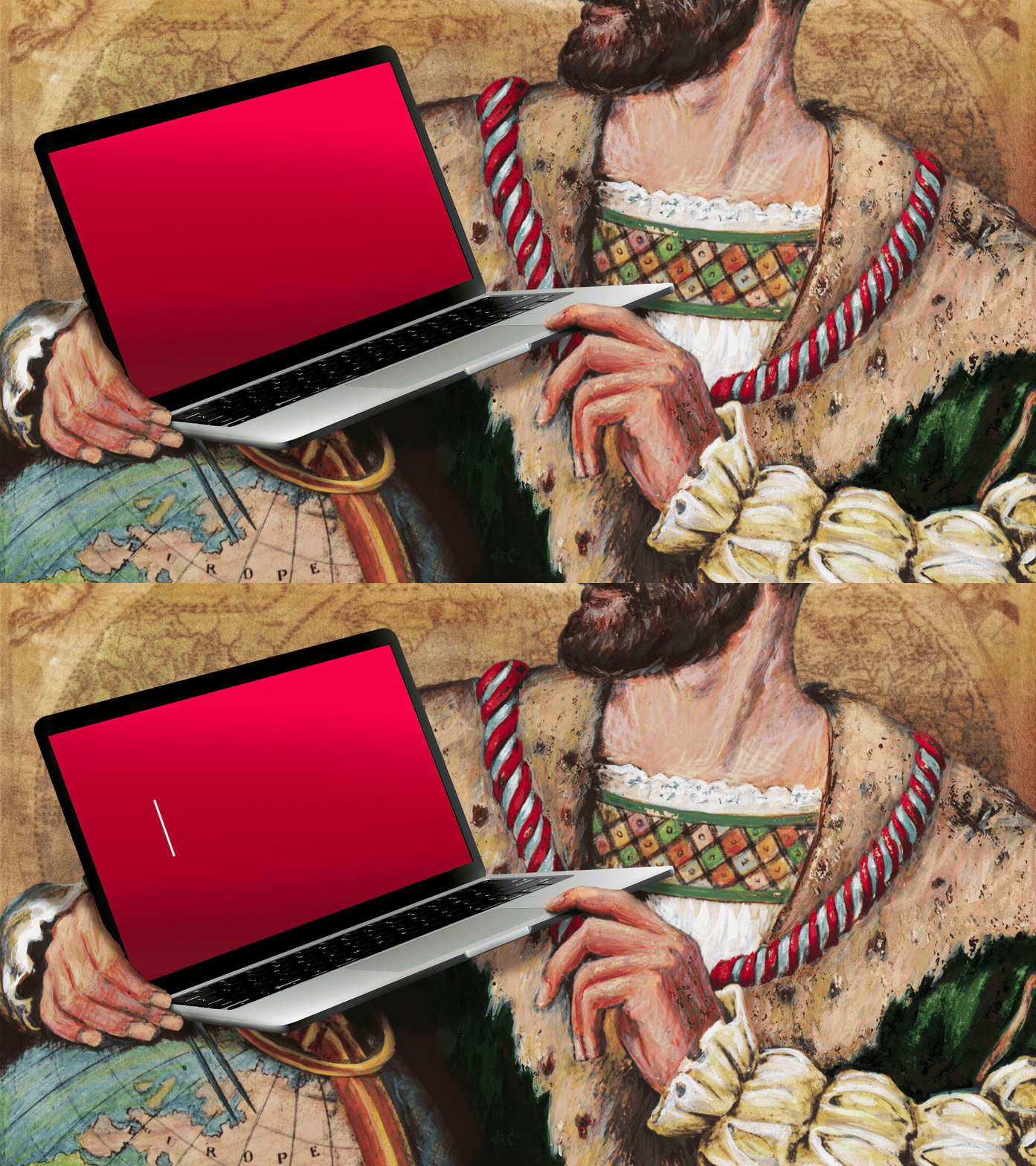
As AI technology expands, it raises questions about cultural representation and the ethics of data collection from marginalized groups.
Artificial Intelligence, with all its promise and potential, finds itself entangled in a knot of cultural and ethical dilemmas. While it transforms how we gather and process information, it also risks reinforcing stereotypes and erasing the rich nuances of Indigenous and minority cultures.
The Western Bias
Most AI models get their foundations from Western writers, primarily white men, embedding their values and biases right into the algorithms. The result? AI systems that mirror these perspectives, often at the expense of diverse cultural voices.
Some critics argue that this data collection is a modern twist on colonialism. Information harvesting replaces the old land grabs, with AI companies profiting off the data from marginalized communities. It's like history repeating itself, just in a digital form.
Whose Knowledge Counts?
Julian Posada, a Yale professor, suggests that while colonialism may seem like a thing of the past, its echoes still resonate today. The AI tools we rely on are largely constructed by the WEIRD, Western, Educated, Industrialized, Rich, and Democratic societies. They pull data from sources entrenched in North American and European contexts. The pitch deck says one thing, but the product says another.
Take Aditya Vashistha's example from Cornell University. AI models often flatten the diversity of Indian cuisine into a single narrative, ignoring the wide spectrum of regional flavors. It's a small example but speaks volumes about the broader issue.
So, Who's Responsible?
Nick Couldry, who co-authored a book on data and colonialism, points out the audacity of this data grab. The mindset isn't just to take what's out there, but a belief that they're entitled to it. It's a deeply colonial act wrapped in modern technology.
With Big Tech racing to outpace competitors, particularly from China, taking the time to engage with Indigenous communities can seem like a costly delay. Michael Sherbert from the Algonquin of Pikwàkanagàn First Nation highlights this ethical conundrum. The grind to stay ahead might just be sidelining voices that matter the most.
The Bigger Picture
Why should this concern us? Because these AI systems increasingly shape our understanding of culture, history, and identity. When algorithms dictate what’s true and legitimate, we ought to ask: Are we comfortable with the biases encoded within?
The founder story is interesting, but the metrics are more interesting. We're looking at a system where profits and speed are prioritized over thoughtful cultural engagement. Does this sound like the way forward for AI? Or just a repetition of past mistakes?
Get AI news in your inbox
Daily digest of what matters in AI.