AI's Future: Who Wins and Who Loses?
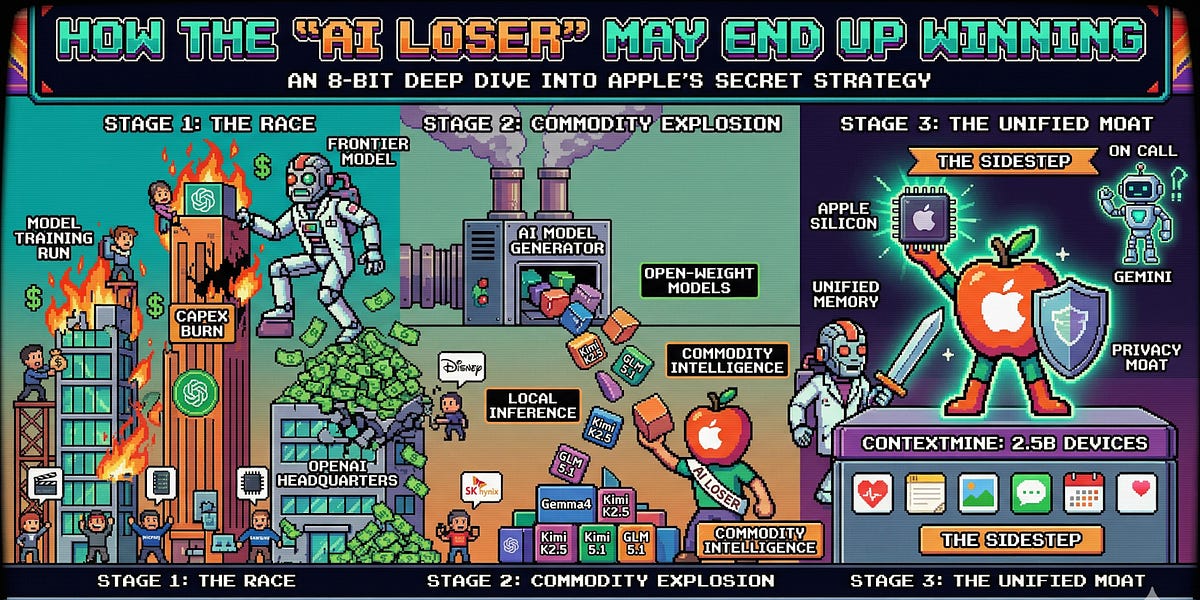
As AI advances, the divide between winners and losers in the industry becomes more apparent. Understanding the dynamics can shape our outlook.
The AI race isn't just about who's first to market, but who defines the market itself. As we march deeper into the era of artificial intelligence, it's becoming clear that not everyone will emerge unscathed. For every ChatGPT or DALL-E that's celebrated, there's an AI startup fading into obscurity, burdened by promises they couldn't keep.
The High Stakes of AI Innovation
The industry loves to paint AI as an inevitable force for good, yet the reality is far more complex. In 2023, we're witnessing a chasm between the AI haves and have-nots. Those with the resources to develop and deploy sophisticated models are pulling ahead, while smaller players struggle to keep pace. This isn't just about technical prowess. It's about who controls the narrative, the funding, and ultimately, the technology that promises to reshape industries.
Consider the numbers: venture capital investments in AI soared past $75 billion in 2022 alone, according to PitchBook. Yet, only a fraction of startups receive the lion's share of this funding. So, what does this mean for innovation? It means established giants like Google and OpenAI continue to consolidate their power, narrowing the field for new entrants.
Accountability or Just Marketing?
Let's apply the standard the industry set for itself. AI firms are quick to tout their ethical guidelines and initiatives. However, without transparency and accountability, these claims ring hollow. Show me the audit. Show me the real-world impact.
The burden of proof sits with the team, not the community. It's about time we demand more than glossy presentations and vague promises. Where's the commitment to addressing biases or ensuring equitable access to AI technologies? These aren't just lofty ideals, they're prerequisites for any technology that aims to be genuinely transformative.
Who Gets Left Behind?
Skepticism isn't pessimism. It's due diligence. The marketing says distributed. The multisig says otherwise. As AI continues to evolve, what safeguards are in place to ensure that its benefits don't remain confined to a privileged few? The burden isn't just on developers and companies, regulators must step up to ensure fairness and accountability.
So, what's next for AI? As we look to the future, we must ask: who will ensure that AI doesn't merely replicate the inequities of the past? The stakes are high, and the cost of complacency could be enormous.
Get AI news in your inbox
Daily digest of what matters in AI.
Key Terms Explained
The science of creating machines that can perform tasks requiring human-like intelligence — reasoning, learning, perception, language understanding, and decision-making.
OpenAI's text-to-image generation model.
The AI company behind ChatGPT, GPT-4, DALL-E, and Whisper.