AI's Front-End Struggles: A Tech Perspective
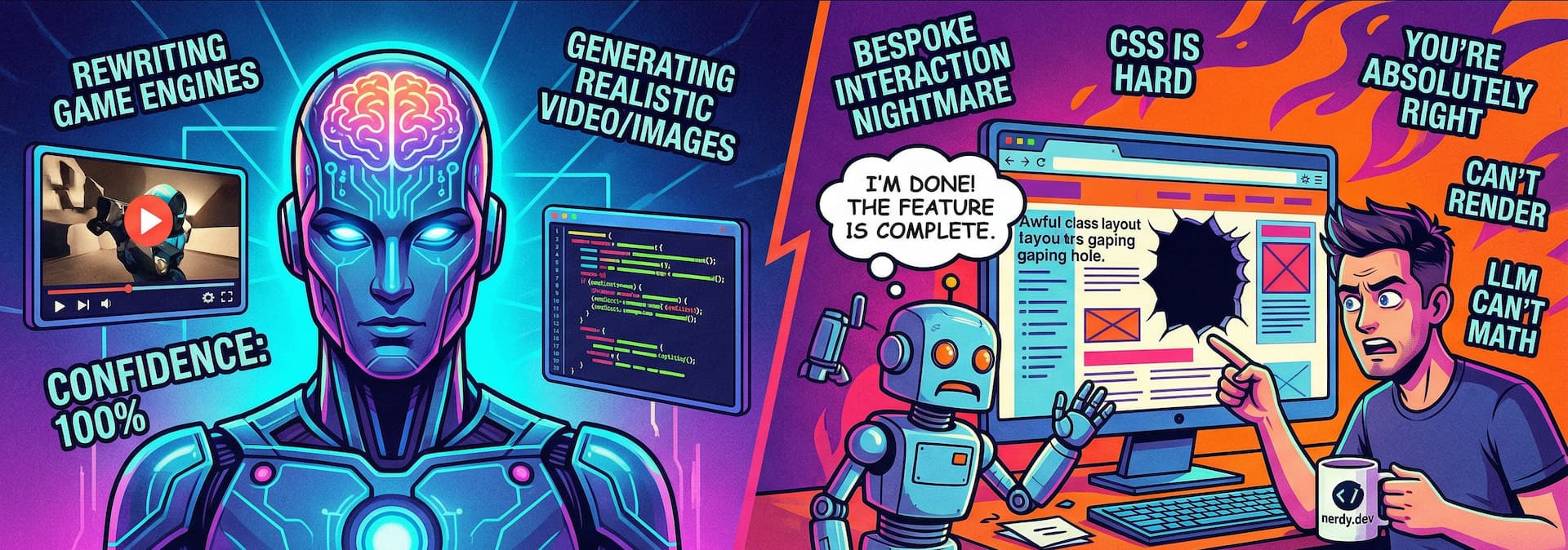
AI's prowess in front-end development remains limited. While it excels at processing vast data sets, its struggle with user-centric design highlights a key challenge.
AI technology, while transformative in many areas, continues to stumble front-end development. The intricacies of user interfaces and aesthetics are proving to be a formidable challenge for AI models that excel in data-driven tasks.
The Design Challenge
The essence of front-end development lies in its ability to cater to human users, not just to process information. AI, with its compute-heavy architecture, often loses sight of the nuanced design principles that make interfaces user-friendly. It's one thing to generate backend solutions, but quite another to ensure a smooth user experience.
AI systems are incredible at crunching data and generating code based on patterns. But creativity and empathy, critical components of user interface design, they fall short. The AI-AI Venn diagram is getting thicker, yet there's a gaping hole in its design capabilities.
A Question of Autonomy
Why hasn't AI mastered front-end development yet? It boils down to autonomy and inference. AI needs to interpret not just data but human intent, which is far less predictable. Front-end development involves decisions that integrate user context, something that AI models currently grapple with.
If agents have wallets, who holds the keys? This analogy applies here too. AI may have the 'wallet' for technical execution, but lacks the 'keys' for intuitive design decisions. AI's autonomy in technical tasks doesn't yet translate to creative autonomy.
Future Directions
So, what does the future hold for AI in front-end design? Companies need to invest in hybrid models that combine AI's computational prowess with human creativity. Think collaborative systems where AI handles the heavy lifting while humans guide the aesthetic and experiential aspects.
This isn't a partnership announcement. It's a convergence. The intersection of AI's capabilities with human intuition could redefine front-end development. But until then, AI's struggle with front-end design serves as a reminder that some tasks still require a human touch.
As AI continues to evolve, it must address these gaps to truly excel in front-end development. The compute layer needs a payment rail, but it's also about building a bridge to human-centered design.
Get AI news in your inbox
Daily digest of what matters in AI.