AI's Disruption of Higher Education: An Inevitable Shift
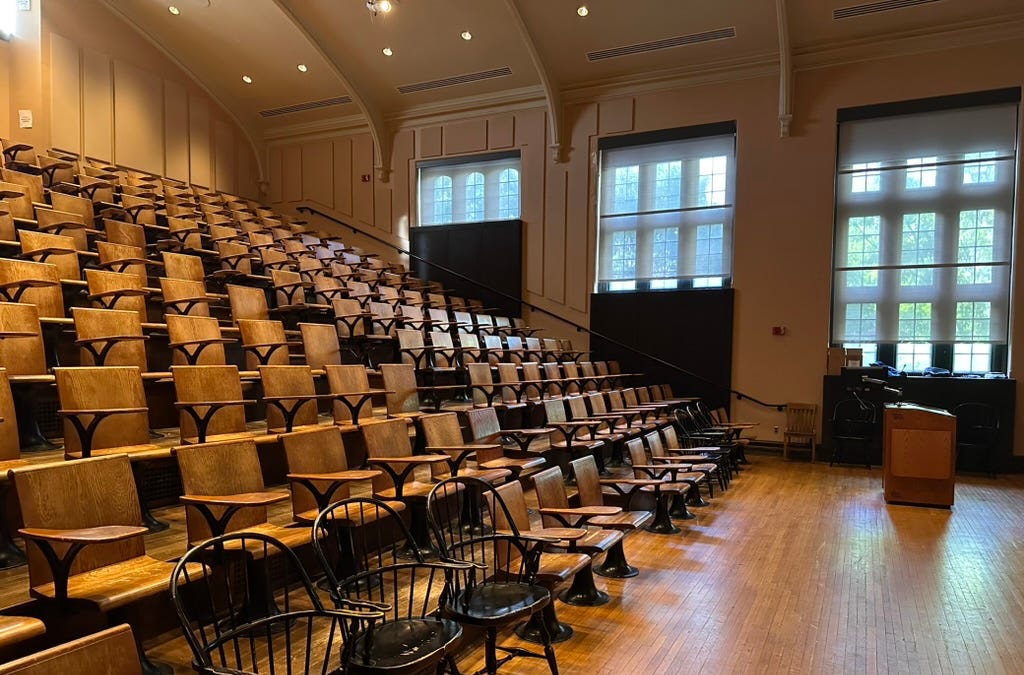
AI's impact on universities isn't just hype. As AI continues to evolve, academia must adapt to a transformed educational landscape.
The ongoing debate about AI's potential to disrupt higher education isn't just speculative chatter. It's a necessary dialogue for an industry staring down the barrel of technological transformation. Professors, administrators, and students alike should be asking what AI means for the traditional university model.
The Core of the Disruption
AI's ability to process vast quantities of information and provide personalized learning experiences poses a direct challenge to conventional teaching methods. Gone are the days when a single professor's lecture was the sole source of knowledge. AI can tailor educational content to individual learning speeds and styles, something no human educator can match at scale.
Consider the potential of AI-driven tutoring systems that offer 24/7 support, providing instant feedback and adapting in real time. It's not about replacing educators but rather augmenting the learning process. But here's the kicker: if AI can do it all, what's the role of a university? Slapping a model on a GPU rental isn't a convergence thesis but integrating AI into academia's fabric will take more than just tech.
Economic Impacts
Let's talk economics. Universities are financial powerhouses, with the top institutions wielding enormous endowments. AI-driven efficiencies could reallocate resources but also threaten job stability for faculty and administrative staff. If AI can hold a wallet, who writes the risk model? The financial implications are significant and can't be ignored.
the cost of education has skyrocketed over the decades. If AI can offer quality education at a fraction of the cost, traditional universities must justify their hefty price tags. Will academia adapt, or will it cling to outdated models until they're forced to change?
Future of Academic Research
Another area ripe for AI disruption is academic research. AI's capabilities in data analysis and pattern recognition can accelerate discoveries across disciplines. But if AI can handle massive datasets with ease, what does this mean for budding researchers and PhD candidates?
The intersection is real. Ninety percent of the projects aren't but the real ones will matter enormously. Universities that embrace AI as a research tool will likely lead the charge in innovation. However, ethical considerations around AI in research will also demand attention. Who's accountable when AI-designed experiments go awry?
The Bottom Line
AI's encroachment on higher education isn't a question of if but when. The traditional university model must evolve to stay relevant in an increasingly AI-driven world. Show me the inference costs. Then we'll talk about AI's real impact.
Universities have been bastions of knowledge for centuries. Will they adapt to become the AI-enhanced institutions of the future? Or will they end up as relics of the past, unable to keep pace with technological advancements?
Get AI news in your inbox
Daily digest of what matters in AI.