AI Threats Spur New Legislation for Critical Infrastructure Cybersecurity
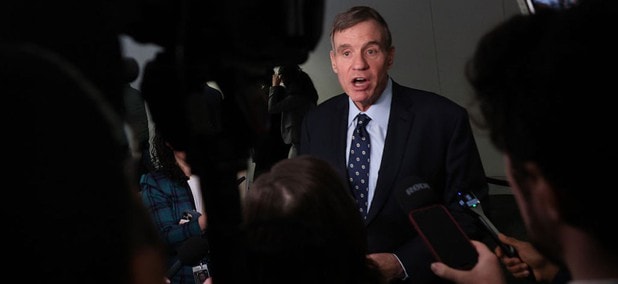
Senator Mark Warner pushes for updated cybersecurity plans to counter AI-induced threats to America's critical infrastructure. The legislation calls for swift updates and biennial reviews.
Senate Intelligence Committee Vice Chairman Mark Warner isn't waiting around. He's introducing legislation that mandates updated cybersecurity plans for each of the United States' 16 critical infrastructure sectors. The driving force? The rapid acceleration of artificial intelligence tools that could amplify threats to essential services.
AI and Critical Infrastructure: A Ticking Clock
The Combat Emerging Threats to Critical Infrastructure Act demands that the Cybersecurity and Infrastructure Security Agency (CISA) collaborate with federal sector risk management agencies to update these plans within a year. And it doesn't stop there. CISA will need to reassess every two years, issuing revised versions and sending them to Congress.
Warner minces no words. "As AI evolves quickly, we must ensure that our cybersecurity defenses keep pace with the threats of the moment," he said. This isn't just a bureaucratic exercise. It's about keeping up with increasingly sophisticated malicious actors, including those powered by AI.
Time to Play Catch-Up
Sector plans are supposed to be updated biennially per National Security Memorandum 22, but that hasn't been the reality. Some haven't seen updates in over a decade. Slapping a model on a GPU rental isn't a convergence thesis. If the AI can hold a wallet, who writes the risk model?
While the bill emphasizes AI-enabled threats such as hacking and deepfakes, it also zeroes in on financial services. CISA must work with the Treasury to assess whether future quantum computers could destabilize the encryption safeguarding digital assets.
The Real Stakes
This isn't just about updating paperwork. The legislation covers sectors from energy to communications and defense. If CISA's new directives don't move fast, we're looking at a lot more than just outdated risk models.
Brian Papp of the National Electrical Manufacturers Association backs the bill, highlighting that manufacturing is a pillar of the economy. "The Combat Emerging Threats to Critical Infrastructure Act will help ensure security plans remain current," he said. But here's the real question: Will updated plans make American infrastructure truly resilient or just delay the inevitable?
CISA is expected to issue a binding operational directive urging agencies to prioritize vulnerabilities. A necessary step, given AI's role in reshaping cyber threats. But decentralized compute sounds great until you benchmark the latency.
Get AI news in your inbox
Daily digest of what matters in AI.
Key Terms Explained
The science of creating machines that can perform tasks requiring human-like intelligence — reasoning, learning, perception, language understanding, and decision-making.
A standardized test used to measure and compare AI model performance.
The processing power needed to train and run AI models.
Graphics Processing Unit.