AI Tackles Physics: Unraveling Open Problems
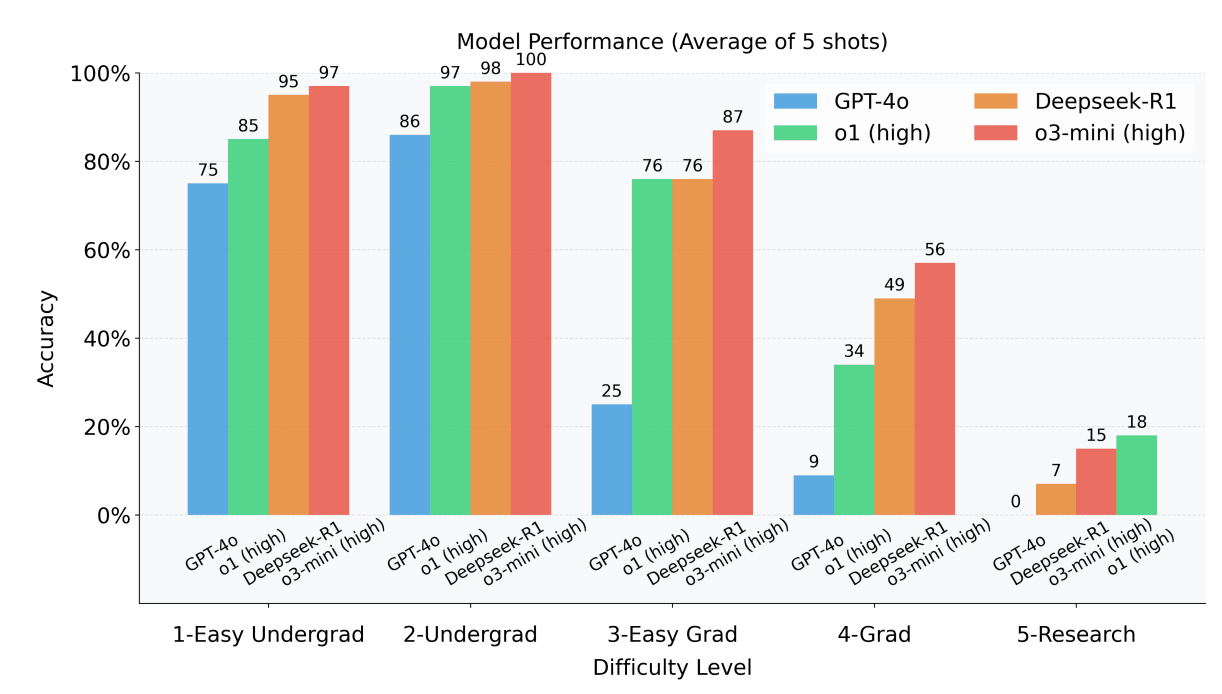
Artificial intelligence is now being wielded to solve some of the most perplexing challenges in physics. From quantum mechanics to general relativity, AI models aim to crack unresolved mysteries.
The intersection of artificial intelligence and physics is expanding, with AI now being deployed to tackle some of the most challenging open problems in the field. As we navigate an era where machine learning meets quantum mechanics, the implications for both domains are immense.
Breaking Down the Complex
Physics, a domain replete with unsolved mysteries, is ripe for AI's agentic capabilities. These models aren't just about crunching numbers. they're redefining how we approach complex systems. Consider quantum mechanics, where AI assists in modeling quantum states, offering insights that were previously out of reach. The compute structure provided by AI can simulate scenarios that would otherwise take decades of manual calculation.
In general relativity, AI helps simulate gravitational interactions on a cosmic scale. This isn't a partnership announcement. It's a convergence. AI's power in handling vast datasets complements the intricate calculations demanded by physics, allowing for new explorations of space-time fabric.
Why Should We Care?
The AI-AI Venn diagram is getting thicker. This is more than an academic exercise. By solving open physics problems, AI not only expands our scientific understanding but also paves the way for technological advancements. Imagine the potential shifts in industries like energy and transportation if we cracked nuclear fusion or developed better materials through AI-driven insights.
Yet, there's a question worth pondering: As AI models gain autonomy, who ensures the integrity and accuracy of their outcomes? If agents have wallets, who holds the keys? Trust and verification in AI outcomes become important as stakes rise alongside potential breakthroughs.
The Path Forward
We're witnessing the early stages of AI's impact on physics. The path forward involves collaboration between physicists and AI researchers to refine models and interpret findings. This isn't just about creating more efficient algorithms. it's about building the financial plumbing for machines and ensuring that AI's contributions are both reliable and revolutionary.
, the fusion of AI and physics isn't just a trend but a significant shift in how we understand the universe. As AI continues to decode the complexities of physics, its role in shaping future technologies and scientific paradigms can't be overstated.
Get AI news in your inbox
Daily digest of what matters in AI.
Key Terms Explained
The science of creating machines that can perform tasks requiring human-like intelligence — reasoning, learning, perception, language understanding, and decision-making.
The processing power needed to train and run AI models.
A branch of AI where systems learn patterns from data instead of following explicitly programmed rules.