AI Surge Fuels Record-Breaking Demand for Clean Energy
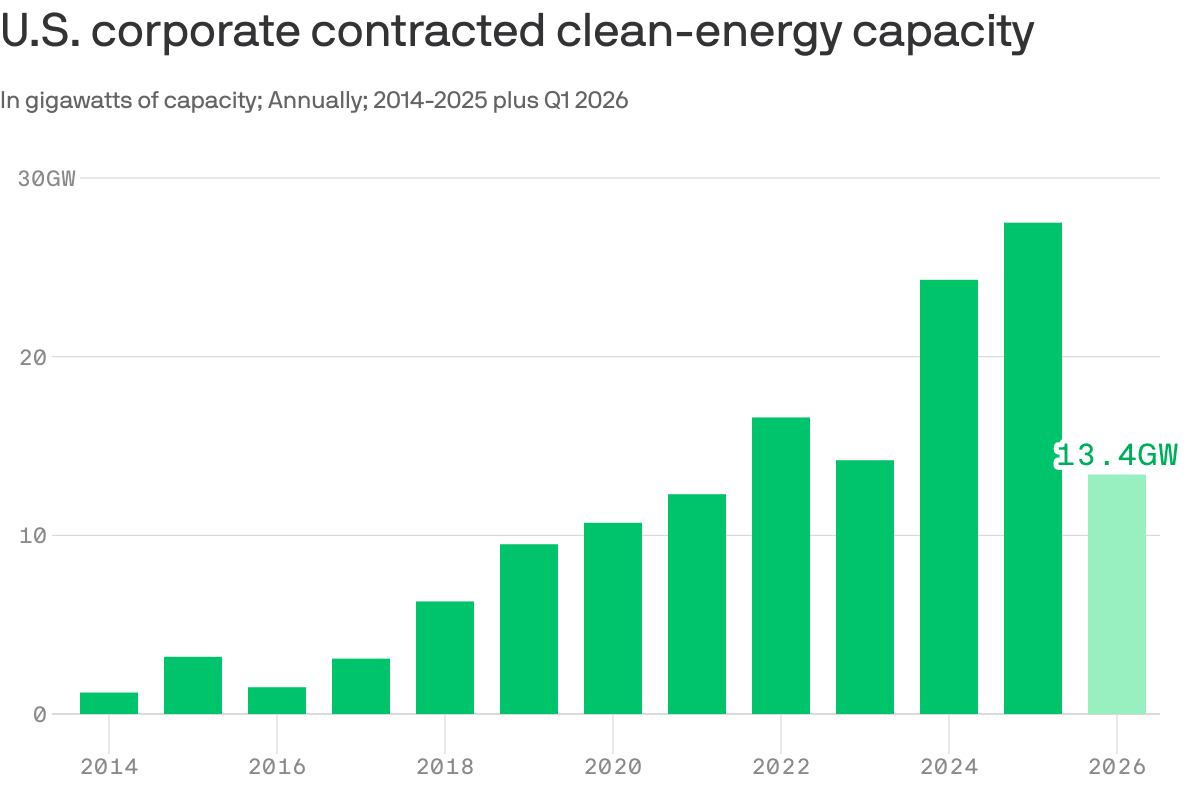
Tech giants are driving a historic surge in clean energy contracts, spurred by AI's rise and looming tax credit deadlines.
Corporations are on track to purchase an unprecedented amount of clean energy in 2026, fueled by the booming AI industry and the urgency to secure soon-to-expire tax credits. According to the Clean Energy Buyers Association, companies contracted a record 13.4 gigawatts of clean energy capacity in just the first quarter of this year.
The AI Boom's Ripple Effect
The AI sector's rapid expansion is a major catalyst for this surge in demand. As companies scale their operations, they require more energy, and many are choosing renewable sources to power their growth. But why should we care? This shift not only boosts the clean energy market but also signals a significant trend where business leaders recognize sustainability as a strategic advantage.
Tax Credits Are the Clock Ticking
Another driving force is the race to qualify for expiring wind and solar tax credits under President Trump's One Big Beautiful Bill Act. Projects must start construction by July 4 or be operational by the end of 2027 to benefit. Will this deadline-driven rush result in a temporary spike, or will it set a new baseline for clean energy adoption?
Rich Powell, CEO of the Clean Energy Buyers Association, sees this year as potentially the biggest ever for clean energy contracts. However, he believes growth will continue beyond these deadlines, as the industry pivots to 'clean, firm' power solutions such as advanced nuclear and geothermal technologies.
Looking Beyond 2026
While the first half of 2026 might seem unusually strong, Powell is optimistic. Contracting for emerging 'clean, firm' technologies is already nearing last year's totals, indicating a sustained shift towards diverse, sustainable energy sources. But can these technologies scale enough to meet growing demands?
In essence, the numbers this quarter confirm a turning point moment for clean energy. As we consider future energy strategies, the question remains: will corporate America maintain this momentum, or is it a fleeting reaction to fiscal incentives?
Get AI news in your inbox
Daily digest of what matters in AI.