AI Security in 2026: The Battlefront of Enterprise Protection
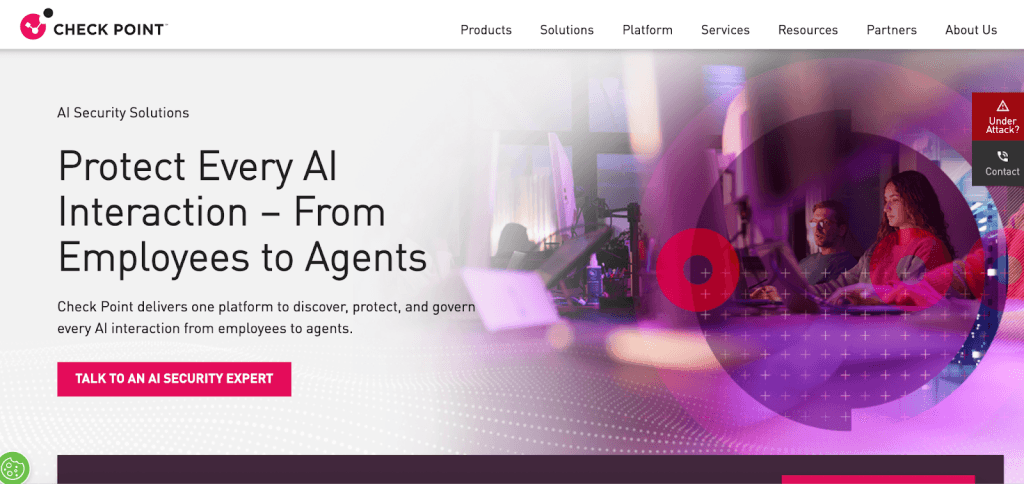
Artificial intelligence is reshaping cybersecurity by powering advanced threats and defenses alike. As enterprises integrate AI, new security platforms are emerging to safeguard infrastructure, models, and interactions.
Artificial intelligence, once a tool for defensive cybersecurity, is now transforming the entire threat spectrum. It's speeding up reconnaissance, making phishing attacks more plausible, automating malware changes, and enabling adaptive attack strategies. Meanwhile, companies are weaving AI agents and tools into their workflows.
The Rise of AI Security
This dual use of AI has birthed a new category: AI security. By 2026, platforms in this space focus on three main challenges: securing enterprise AI usage, protecting AI models and infrastructure, and defending against AI-driven threats.
Let's look at five leaders in AI security for 2026. Check Point’s AI-driven security integrates into its Infinity platform, unifying network, cloud, and endpoint protections. Its core, ThreatCloud AI, leverages over 50 AI engines across 150,000 networks for a rapid, coordinated defense. GenAI Protect and Infinity AI Copilot offer advanced monitoring and security operations, tackling AI risks at multiple layers.
Key Players and Strategies
Next, CrowdStrike extends its Falcon platform, focusing on prompt injection defense and integrating AI assistants into security operations. This is particularly beneficial for enterprises already using Falcon.
Cisco approaches AI security from a network perspective, inspecting AI-related traffic at the network layer. Their AI Defense integrates into the Security Service Edge, aligning with NIST and MITRE frameworks, making it ideal for regulated industries.
Microsoft’s advantage is its scale, processing trillions of security signals daily. Security Copilot automates triage and integrates across multiple ecosystems, appealing to those heavily invested in Microsoft 365.
Okta emphasizes identity governance, treating AI agents as first-class identities. It identifies over-privileged accounts, a must for enterprises heavily deploying AI agents.
Choosing the Right Platform
How should enterprises choose among these platforms? A company's existing architecture and maturity matter more than ever. Those building AI internally should focus on infrastructure protection and identity governance. However, the real challenge isn't just choosing a platform. It's integrating AI security into the entire architecture.
Why should businesses care? Because AI is both a tool and a target in 2026. Ignoring AI security is like leaving the safe open in a bank. Companies that treat AI security as an integral part of their existing infrastructure will stand a better chance against emerging threats.
The unit economics break down at scale, which means investing in solid AI security now could prevent costly breaches later. The stakes are high, and the question is, can businesses afford not to integrate AI security?
Get AI news in your inbox
Daily digest of what matters in AI.