AI in Software Development: Boost or Bottleneck?
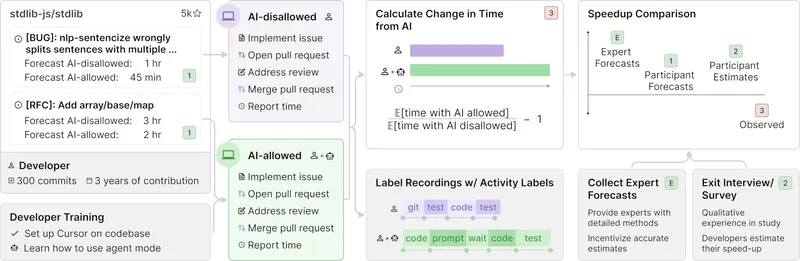
AI's role in software development is a double-edged sword. While it enhances productivity, it also presents new challenges.
Artificial Intelligence in software development is thickening the AI-AI Venn diagram. It's both a catalyst for efficiency and a potential roadblock. The debate around whether AI is a productivity booster or a bottleneck in coding circles isn't new. Yet, it remains as relevant as ever.
Productivity Gains or Losses?
AI tools like GitHub Copilot and OpenAI's Codex claim to enhance developer output. They promise to automate mundane coding tasks, freeing developers to focus on more complex problems. According to a recent study, developers using AI-assisted tools reported a 30% reduction in coding time for routine tasks. That's no small feat in a world where time is money.
However, the flip side can't be ignored. Increased reliance on AI may lead to a skill atrophy among developers. If machines handle all the heavy lifting, where does that leave human expertise? Are we nurturing a generation of developers who can't code from scratch?
The Learning Curve
Integrating AI into development isn't without its challenges. It demands a steep learning curve for teams unaccustomed to these tools. The time spent learning and adapting can initially slow down productivity. But once mastered, the efficiency gains can be significant.
AI's decision-making isn't flawless. Erroneous code suggestions or security vulnerabilities can slip through the cracks, requiring human oversight. If AI agents have wallets, who holds the keys to quality assurance?
Future of Development
Looking ahead, AI's role in software development will likely expand. But the path isn't straightforward. We must balance the immediate productivity gains with long-term skill development and quality assurance.
In the end, AI in software development isn't just a trendy add-on. It's a convergence. The compute layer needs a payment rail, and we're building the financial plumbing for machines. The question is, are we ready for the changes it brings to the workforce?
Get AI news in your inbox
Daily digest of what matters in AI.
Key Terms Explained
The science of creating machines that can perform tasks requiring human-like intelligence — reasoning, learning, perception, language understanding, and decision-making.
The processing power needed to train and run AI models.
The AI company behind ChatGPT, GPT-4, DALL-E, and Whisper.