AGIBOT's Real-World AI Challenge: Are Robots Ready for Prime Time?
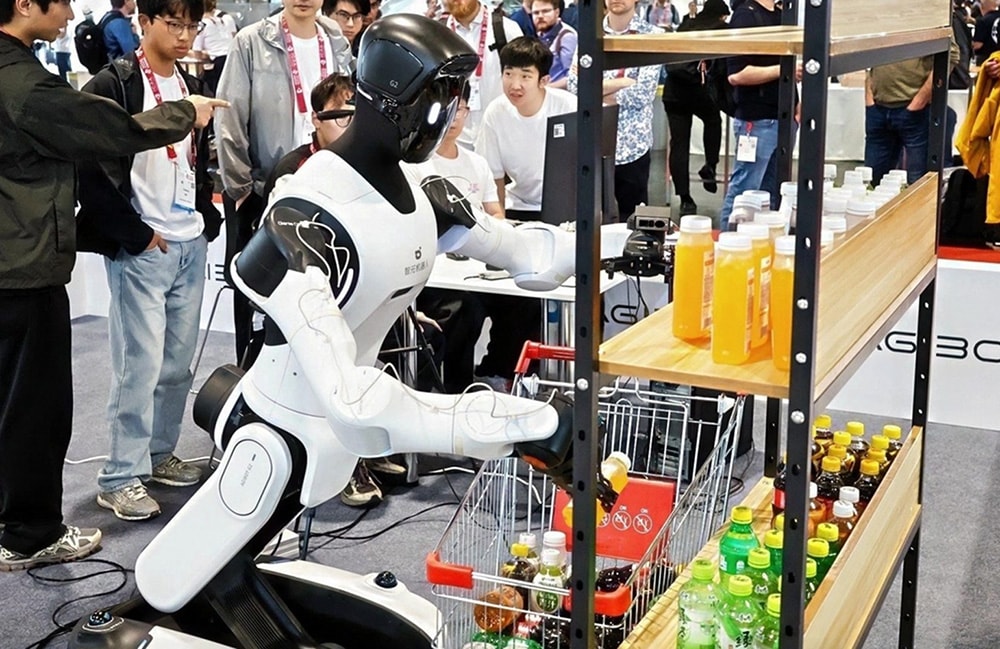
AGIBOT's 2026 World Challenge put AI models to the test in real-world scenarios, revealing a shift from simulation to tangible robot tasks. But who truly benefits from these advancements?
AGIBOT Innovation Technology Co. made a splash last week in Vienna with the AGIBOT World Challenge 2026. Bringing together 526 teams from 27 countries, the event aimed to push embodied AI from theory into practice. Gone are the days of mere simulation scores. This competition emphasized real tasks, real robots, and real benchmarks.
Shanghai-based AGIBOT showcased two main tracks: 'Reasoning to Action' and 'World Model.' These weren't just fancy titles. They marked a shift towards evaluating AI on its ability to function in the physical world, instead of just in a controlled environment. It's a change long overdue, considering the gap in AI performance between sterile labs and the messy real world.
Real Robots, Real Challenges
During the offline finals, teams grappled with the AGIBOT G2 humanoid robot. They didn't just simulate actions. they performed them, highlighting robot stability and adaptability as central to the evaluation. This isn't just a tech battle. It's about aligning AI development with the messy, unpredictable human world.
Participants from top institutions like the Chinese Academy of Sciences and Tsinghua University competed fiercely. In the end, vivo's PrismBot clinched the top spot with 43.47 points, edging out Shanghai RoboParty and Russia’s GreenVLA. But what's the larger takeaway here? It's about more than winning. It's about proving AI can handle real-world tasks.
Supermarket Sweep or Flop?
AGIBOT didn't stop with humanoids. Alongside Dexmal, they introduced a supermarket benchmark track, focusing on end-to-end decision-making and whole-body control. Imagine robots navigating store aisles, picking items, and placing them, all while dealing with unpredictable variables like shelf heights and item placement.
It sounds impressive, and NeoVerse-ABot took the top spot in this track. But ask the workers, not the executives. Are these robots ready to replace human jobs in retail? Who pays the cost when they fail? The productivity gains went somewhere. Not to wages.
The Bigger Picture
AGIBOT’s efforts didn't stop with the competition. They've rolled out a full-stack toolchain for real-world data, simulation evaluation, and real-robot testing. Their goal? To move embodied AI from isolated algorithmic achievements to scalable, deployable systems.
But let's be clear. Automation isn't neutral. It has winners and losers. While companies like AGIBOT push the tech envelope, the question remains: who truly benefits from these advancements? The jobs numbers tell one story. The paychecks tell another.
Get AI news in your inbox
Daily digest of what matters in AI.
Key Terms Explained
A standardized test used to measure and compare AI model performance.
The process of measuring how well an AI model performs on its intended task.
The ability of AI models to draw conclusions, solve problems logically, and work through multi-step challenges.
An AI system's internal representation of how the world works — understanding physics, cause and effect, and spatial relationships.