AGIBOT World Challenge 2026: Testing AI in the Real World
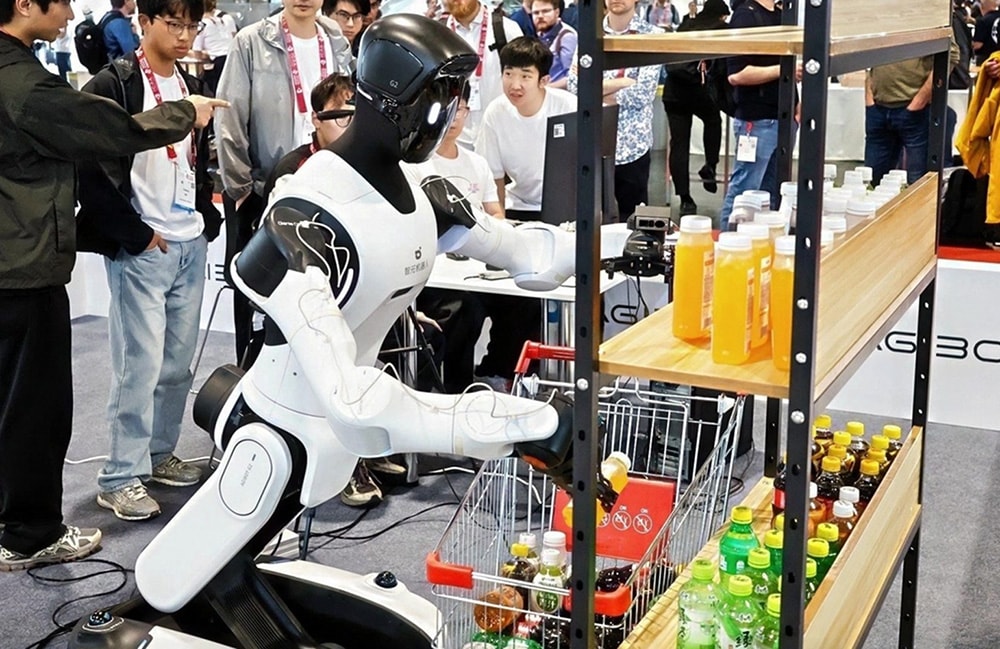
The AGIBOT World Challenge 2026 pushed AI models to perform real tasks beyond simulations. With 526 teams from 27 countries, the event shifted focus from simulation scores to real-world deployment needs.
The AGIBOT World Challenge 2026 in Vienna wasn't just a tech showcase. It was a global laboratory for embodied AI, where 526 teams from 27 countries tested their mettle. Shanghai-based AGIBOT and its partners moved AI evaluation from sterile simulations to real-world tasks, placing embodiment at the heart of AI's future.
Rethinking AI Evaluation
Forget simulated scores. AGIBOT's competition embraced real robots and tasks, setting a new standard for AI evaluation. By integrating the EWMBench and Genie Sim Benchmark, the challenge enabled automated testing and standardized metrics. But who benefits from this rigorous framework? The answer is the teams whose algorithms now face the unpredictability of the physical world.
Among the finalists, the Chinese Academy of Sciences, Tsinghua University, and UC San Diego showcased their prowess. More than 100 teams bested the baseline, but the real question is whether these benchmarks truly reflect practical deployment needs. The paper buries the most important finding in the appendix: real-world adaptability is now central to scoring.
Tracks Transforming AI
The competition featured two main tracks: Reasoning to Action (R2A) and World Model (WM). R2A focused on robots understanding tasks and executing them, a departure from the previous year's emphasis on manipulation alone. Meanwhile, the WM track examined how AI predicts world changes through actions and sensor inputs. AGIBOT challenges the AI community to look closer at how predictions align with physical outcomes.
In the R2A track, PrismBot from vivo emerged triumphant with 43.47 points. Does this signal a new era where private companies outshine academia? Shanghai RoboParty and Russia's GreenVLA followed, but it's clear industry players are stepping up their game.
Supermarkets as a Testing Ground
AGIBOT didn't stop at conventional tasks. Alongside the main event, it introduced a supermarket benchmark, simulating real-world retail challenges like object drops and randomized item placement. This track pushed models to navigate and manipulate under constraints, offering a more practical test for AI's embodied intelligence.
Here, NeoVerse-ABot, a team from the Chinese Academy of Sciences and Amap CV Lab, clinched first place. The competitive spirit was palpable, but whose data, whose labor, and whose benefit are at stake in these real-world simulations? The benchmark doesn't capture what matters most: the nuanced tasks AI must master in unpredictable environments.
AGIBOT's Bold Vision
AGIBOT's full-stack toolchain aims to bridge the gap between simulation and reality, integrating real-world data and testing to refine AI models. With plans to launch an online leaderboard and expand benchmarks, the company is betting on AI's future in tangible deployments. This is a story about power, not just performance.
The message is clear: AI's potential lies in its real-world applications, not just in controlled lab environments. But ask who funded the study, and you'll see the real power dynamics at play. As Fraunhofer IPA and NIST roll out their benchmarks, the race is on to define AI's role in everyday life.
Get AI news in your inbox
Daily digest of what matters in AI.
Key Terms Explained
A standardized test used to measure and compare AI model performance.
The process of measuring how well an AI model performs on its intended task.
The ability of AI models to draw conclusions, solve problems logically, and work through multi-step challenges.
An AI system's internal representation of how the world works — understanding physics, cause and effect, and spatial relationships.