AGIBOT World Challenge 2026: Pushing AI Models Beyond Simulation
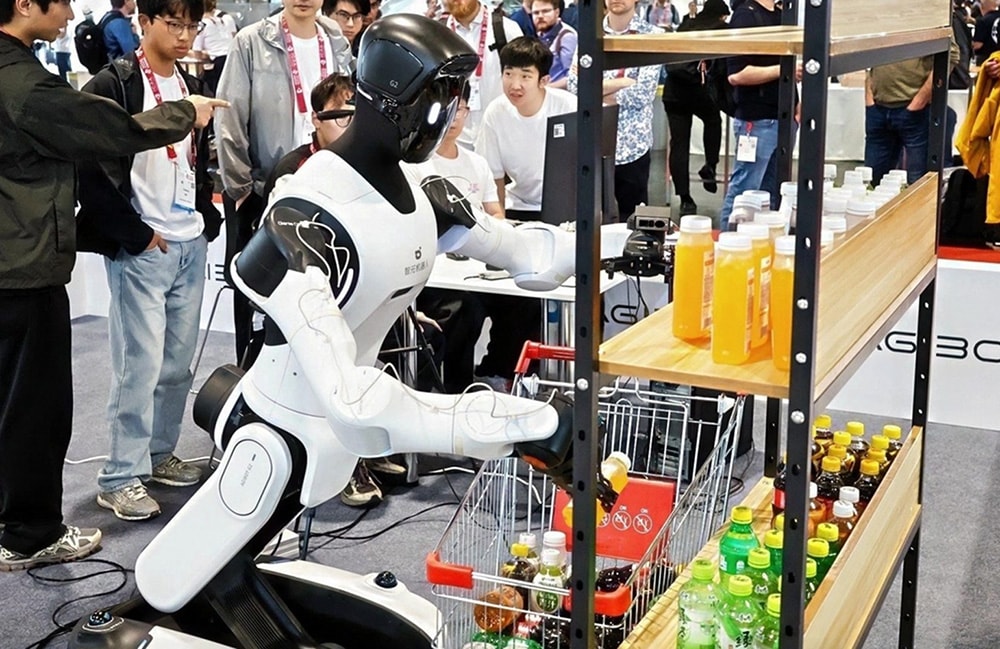
AGIBOT's World Challenge 2026 in Vienna showcased the evolution of embodied AI, focusing on real-world tasks and practical deployment. With participation from 526 global teams, the event emphasized moving AI evaluation beyond simulations.
AGIBOT Innovation Technology Co. set the stage for a transformative leap in embodied AI with its World Challenge 2026, held in Vienna alongside ICRA 2026. A gathering of 526 research and enterprise teams from 27 nations participated, pushing the boundaries in two key AI tracks: 'Reasoning to Action' and 'World Model.' This competition highlighted a important shift from simulation scores to real-world testing, aligning more closely with practical deployment needs.
Redefining AI Evaluation
The competition format was revolutionary, combining automated online evaluation with an offline real-robot final. Using AGIBOT's EWMBench and Genie Sim Benchmark, the event ensured consistent, reproducible results through standardized metrics. This approach placed emphasis on robot stability, adaptability, and long-horizon task reliability, showcasing a more deployment-focused evaluation framework.
Teams engaged in tasks using the AGIBOT G2 humanoid robot, which underscored the importance of aligning technical evaluation with deployment realities. Participants hailed from esteemed institutions and companies like the Chinese Academy of Sciences, Tsinghua University, and more, with over 100 teams surpassing the official baseline. But what do these advancements mean?
The Shift from Simulation to Reality
Beyond the technical showcase, the event signals an industry-wide shift. Moving from theoretical simulation to real-world application can better prepare AI for practical tasks. AGIBOT's challenge particularly focused on supermarket tasks, designed to reflect complex real-world interactions through a new benchmark track.
This track required robots to handle non-ideal physical interactions, from object manipulations to dealing with grasping failures. It's a move towards more comprehensive evaluation, providing a reliable framework for embodied intelligence. But are we truly ready for this leap? Can AI handle the unpredictability of real-world scenarios?
Beyond the Competition
AGIBOT isn't stopping at competitions. The company introduced a full-stack toolchain for robotic validation, encompassing real-world data, simulation evaluation, and real-robot testing. This toolkit addresses the perennial gap between simulated performance and real-world deployment, supporting developers in validating AI models across different stages.
AGIBOT plans to integrate resources from the competition with ongoing developments, including an online simulation leaderboard and diversified benchmarks. The aim is clear: move embodied AI from algorithmic successes to scalable real-world systems.
The World Challenge is a step in the right direction, setting a practical precedent for AI development. But let's not forget, the journey from a controlled environment to an unpredictable world is fraught with challenges. As the industry evolves, it's essential to remember that HIPAA and immutability don't play well together. Yet, the pursuit of practical AI continues, and the stakes have never been higher. What does this mean for the future of AI, and how will it reshape industries reliant on precision and adaptability?
Get AI news in your inbox
Daily digest of what matters in AI.
Key Terms Explained
A standardized test used to measure and compare AI model performance.
The process of measuring how well an AI model performs on its intended task.
The ability of AI models to draw conclusions, solve problems logically, and work through multi-step challenges.
An AI system's internal representation of how the world works — understanding physics, cause and effect, and spatial relationships.