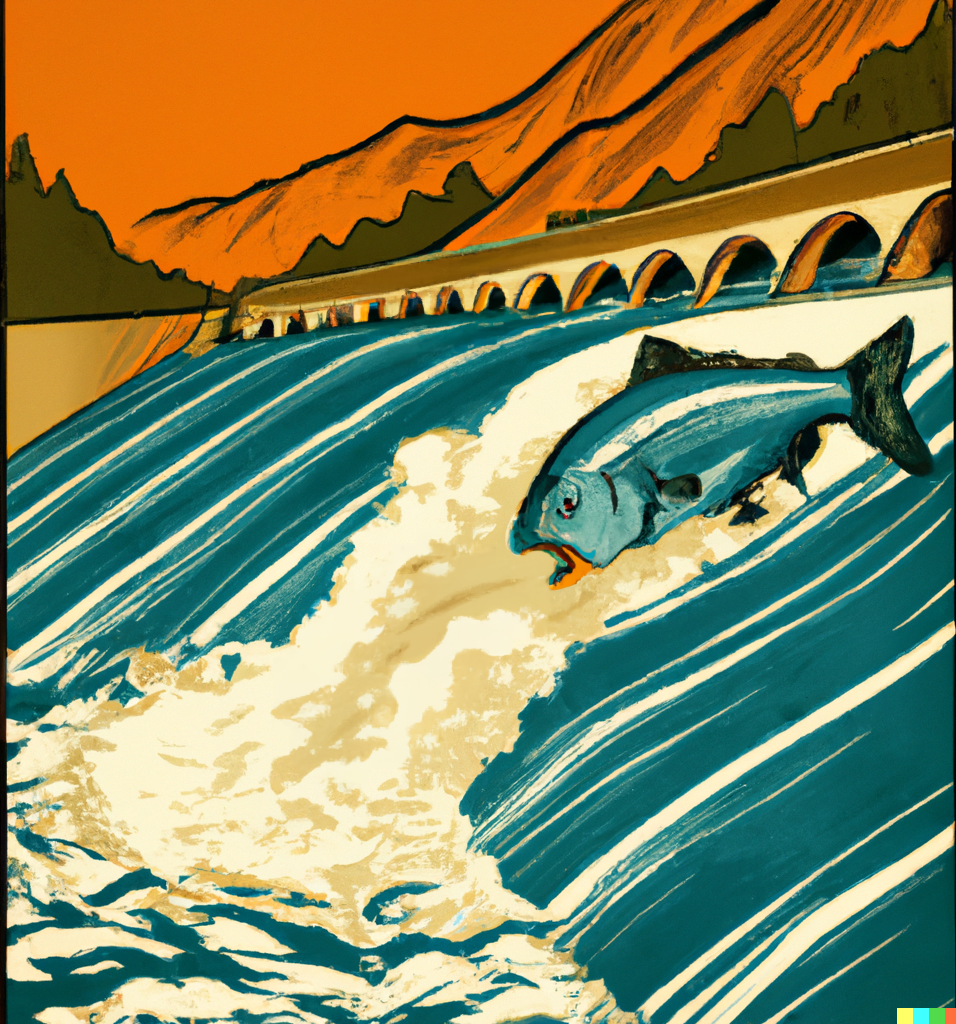
Balancing power and responsibility has never been an easy task, especially for hydroelectric dams. While they supply vital energy, they also disrupt local ecosystems, particularly affecting fish populations. Enter machine learning, poised to make easier the regulatory nightmare of fish counting but fraught with its own set of challenges.
The Regulatory Waters
Under the watchful eye of the Federal Energy Regulatory Commission (FERC), hydroelectric dams must prove they're not turning the waterways into marine graveyards. Detailed studies, primarily revolving around fish counts, are required to ensure compliance. Yet, the traditional methods, involving humans counting fish, are error-prone and labor-intensive.
To meet FERC's standards, dams must regularly produce data showing their operations aren't hurting endangered fish populations. The primary dataset? Fish counts. Fish are counted as they navigate through structures like fish ladders, a task that demands precision and expertise. But manual counting is hardly foolproof, is it?
AI: A Double-Edged Sword
Enter computer vision. This technology promises to automate the arduous task of fish counting, reducing human error and speeding up data collection. Yet, the solution isn't as effortless as one might hope. Training algorithms to differentiate between species, identify injuries, and note other subtleties is no small feat. It demands vast datasets and expert tagging, which can introduce their own biases.
The burden of proof sits with the team, not the community. Can these algorithms truly match the nuanced understanding a human brings? Are we ready to trust a machine with the delicate task of conserving endangered species? Let's apply the standard the industry set for itself.
Obstacles and Opportunities
Challenges abound. From poor image quality due to environmental conditions to the risk of model drift, the hurdles are significant. And let's not ignore the human factor, displacing skilled workers with technology can lead to job loss and erode essential expertise.
Organizations are tempted by the promise of efficiency, but at what cost? The burden of constant monitoring and retraining algorithms could outweigh the initial savings. Moreover, regulatory compliance isn't just about ticking boxes. it's about genuine environmental responsibility.
So, the question remains: Is AI the savior of the hydroelectric industry or just a tech bandage over a much deeper problem? Skepticism isn't pessimism. It's due diligence. As AI continues to influence environmental policies, its implications on both ecosystems and economies will demand rigorous scrutiny.