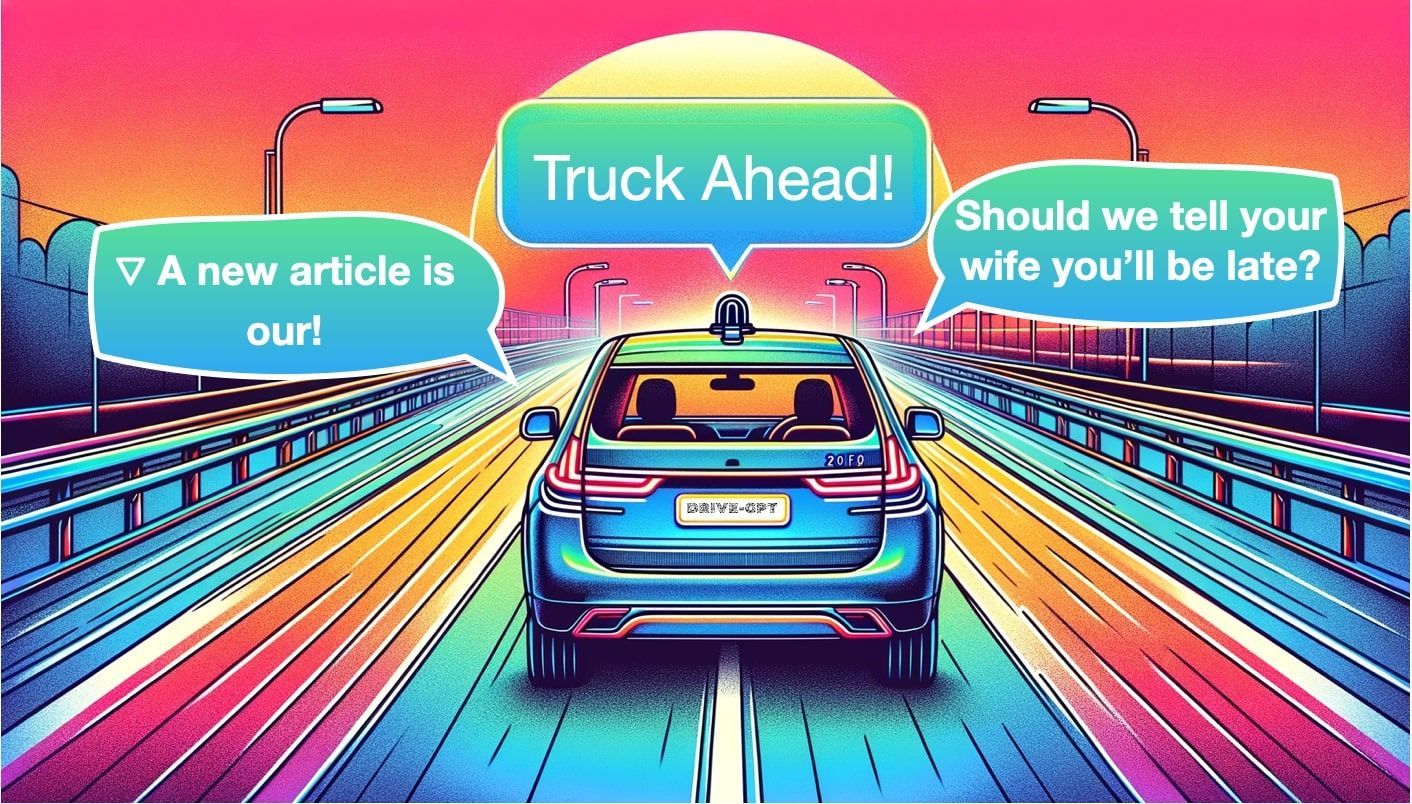
self-driving cars, the race to perfection often feels like chasing a moving target. For years, developers have relied on a modular approach, breaking down the driving task into perception, localization, planning, and control. But does this piecemeal strategy really cut it?
Enter the era of large language models (LLMs). Picture this: a single neural network that could unify these modules by predicting steering and acceleration directly from raw sensor data. It's an enticing prospect, but here's the thing, it introduces a new breed of black box problems.
The Rise of End-To-End Learning
The analogy I keep coming back to is the accidental discovery of penicillin in 1928. Just as that moldy petri dish revolutionized medicine, LLMs might be the unexpected breakthrough for autonomous driving. Traditional modular systems are being challenged by end-to-end learning models. These neural networks aim to simplify the whole process, but at the cost of transparency.
Think of it this way: LLMs could potentially map complex input data like images and sensor readings directly to car control actions. But, if you've ever trained a model, you know that getting a neural network to understand the complexities of driving is no small feat. Yet, the idea is gaining traction.
From Text to Terrain
So how do LLMs fit into the picture? The process starts with tokenization, breaking down data into manageable bits, just like text is broken into tokens in language models. This doesn't just apply to words. it can apply to sensor data from a car's countless inputs. From there, transformers take over, processing these tokens to interpret the environment and decide the vehicle's next move.
The potential applications are vast. LLMs could enhance perception by identifying and tracking objects or even predicting the behavior of surrounding vehicles. They might also assist in planning, suggesting the best trajectory based on current road conditions. But can they do this reliably?
Can We Trust the Machines?
Here's where the debate heats up. Trust is a big deal in autonomous driving, and while LLMs are making impressive strides, the technology is still young. The possibility of AI 'hallucinations', when models generate outputs that are factually incorrect or nonsensical, raises concerns. Can a system prone to such errors be trusted to navigate real-world traffic?
Honestly, we're in the early days. The first wave of integrating LLMs into self-driving tech began around mid-2023. The question remains: are these systems ready for the street, or is this another AI mirage? The answer might not be clear yet, but the rapid pace of development suggests we could be on the brink of something transformative.